
🏛️ Introduction: What Are the Giants’ Tombs
Have you ever wondered what lies behind these mysterious stone monuments that dot the Sardinian landscape? I, as a passionate student of our beloved island’s history, have dedicated years to studying The Giants’ Tombs in Sardinia: a complete guide to Nuragic monuments, and today I want to share with you everything I have discovered about these incredible stone giants.
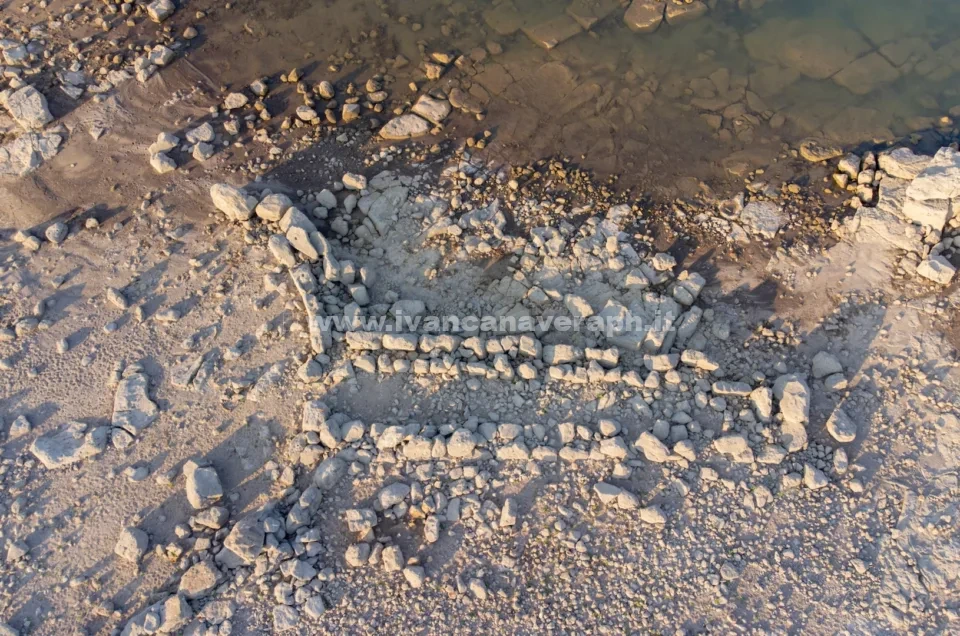
The Giants’ Tombs, called “tumbas de sos mannos” in the Sardinian language, are megalithic funerary monuments exclusive to Sardinia, used as collective burials by the Nuragic civilization presumably between 1800 and 1100 BC. During my surveys around the island, I have had the privilege of admiring these stone colossi up close, and each time I feel the same emotion: I feel small in the face of the greatness of a civilization that, over three thousand years ago, was already capable of creating such imposing and meaningful works.

The name “Giants’ Tombs” comes from Sardinian popular imagination, but archaeologists have adopted this evocative denomination to identify these monuments unique in the world. According to Caterina Bittichesu’s book “The Cult of Ancestors in Bronze Age Sardinia,” there are 1,434 Giants’ Tombs in Sardinia, an impressive number that testifies to the importance of these places in Nuragic society.
When I stand before one of these tombs, I cannot help but imagine the ceremonies that took place here, the ancestral rites, the offerings to the deceased. These monuments were not simple burials, but true centers of worship where the community gathered to honor the ancestors and keep alive the bond between the world of the living and that of the dead. Their widespread distribution throughout the Sardinian territory tells us of a complex, organized, deeply spiritual society.
🏗️ Origins and the Role of Nuragic Man
To fully understand the meaning of the Giants’ Tombs, we must immerse ourselves in the world of the Nuragic civilization, one of the most fascinating and mysterious of antiquity. During my research in archives and my visits to archaeological sites, I have been able to reconstruct the picture of a society extraordinarily advanced for its time.
The Giants’ Tombs represent unique testimonies of the funerary practices of the Nuragic age, characterized by imposing forms of collective burial dating to a period between approximately 1800 and 1100 BC. This time span, which crosses the Ancient, Middle, and Final Bronze Age, tells us of a civilization in continuous evolution, capable of adapting its funerary traditions to changing social and spiritual needs.

👉 Per i miei viaggi scelgo sempre DiscoverCars per il noleggio auto.
È affidabile, veloce e con ottime tariffe.
👉 I always choose DiscoverCars for my trips.
Reliable, fast and with excellent rates.


The Nuragic man I imagine was deeply connected to the land and ancestors. The construction of these monuments required careful planning, advanced technical skills, and above all strong social cohesion. It was not a single individual who decided to erect a Giants’ Tomb, but the entire community that mobilized to honor its dead. This makes me reflect on how developed the sense of belonging and generational continuity was in this ancient society.
The origins of these monuments have their roots in the European megalithic tradition, but the Nuragics were able to create something unique and distinctive. The choice to use enormous blocks of local stone, worked with refined techniques, testifies not only to the technical skill of these ancient builders, but also to their deep knowledge of the territory and available materials. During my explorations, I have noticed how each tomb is perfectly integrated into the surrounding landscape, as if it were a natural part of the environment.
The role of Nuragic man in the construction of these monuments went far beyond the purely technical aspect. He was the interpreter of a complex cosmogony, the guardian of millennial traditions, the architect of a constant dialogue between the earthly and spiritual worlds. Every stone positioned, every orientation chosen, every decorative detail had a precise meaning within a belief system that today we can only intuit but which then guided every aspect of social life.
🔨 How the Giants’ Tombs Were Built
The construction of a Giants’ Tomb represented a titanic undertaking that required extraordinary technical skills and perfect work organization. During my field studies, I have been able to observe closely the construction techniques used by the Nuragics, and each time I remain amazed by their mastery.
The process began with the choice of site, which was never random. According to some scholars, the Giants’ Tombs would be built based on a sort of esoteric map corresponding to points where energy flows concentrate most, invisible currents released by the earth that ancient man knew how to perceive and use. This theory, however fascinating, is accompanied by more practical considerations: proximity to water sources, presence of stone quarries, site accessibility.
Once the site was identified, the extraction and working of stone blocks began. The Nuragics mainly used trachyte, basalt, and granite, local materials of great resistance. The dimensions of some blocks are impressive: I have personally measured stelae that exceed 4 meters in height and weigh several tons. How they managed to transport and position these masses of stone remains still today a partially unsolved mystery.
The construction technique involved several phases. First the ground was prepared, leveling and compacting the area destined for construction. Then they proceeded with laying the foundation blocks, using the perfect interlocking technique typical of Nuragic architecture. The masonry work consists of perfectly worked blocks that fit together without the use of mortar, a technique that guaranteed stability and durability over time.
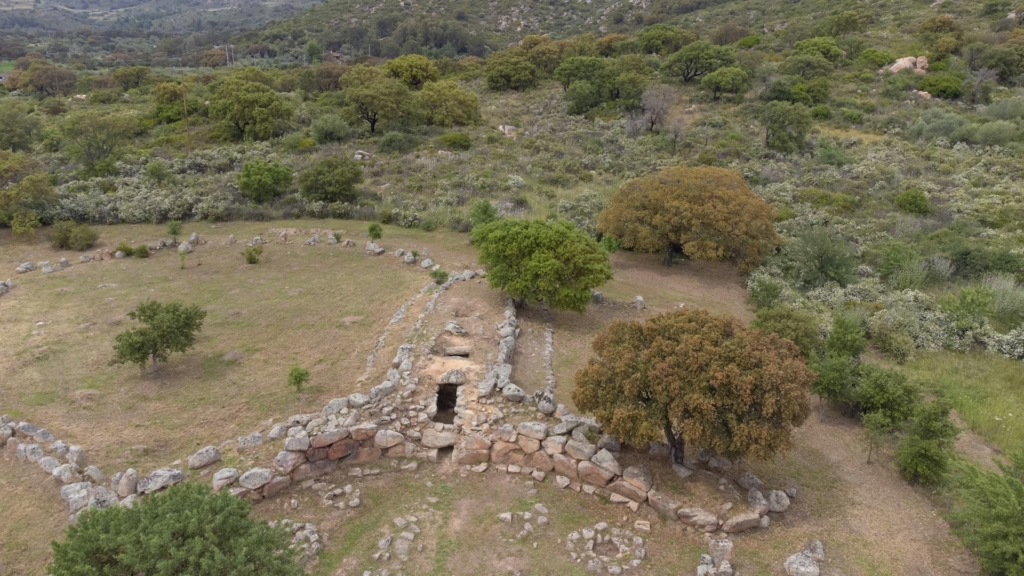
The most spectacular element was the realization of the exedra, the frontal semicircle that characterizes these monuments. Here the builders had to demonstrate all their skill in calculating curves, balancing weights, creating that perfect architectural harmony that still leaves us breathless today. The central stele, when present, was positioned with extreme precision, often decorated with geometric or symbolic motifs that had a specific ritual meaning.
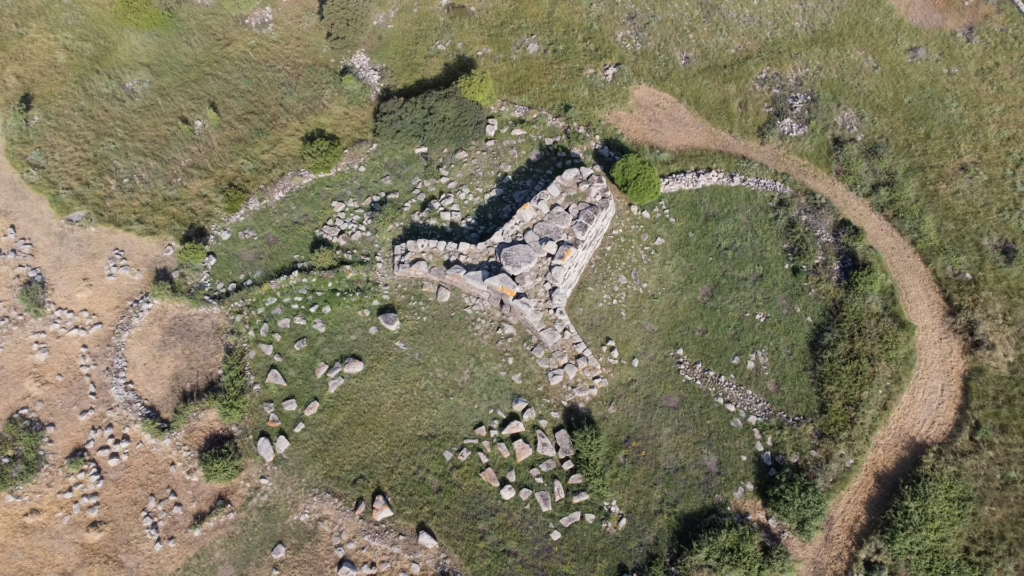
The tomb body, the long rear funerary chamber, also required specialized skills. The covering, made with the false vault technique or with stone slabs, had to be resistant enough to support the weight of the tumulus of earth and stone that covered the entire structure. The astronomical orientation, often towards South-East in the direction of the constellation Taurus, required precise astronomical knowledge that testifies to the high cultural level reached by this civilization.
⭐ Architectural and Symbolic Characteristics
The Giants’ Tombs represent a unique feature in world funerary architecture, and every time I find myself in front of one of these monuments, I am struck by the perfect synthesis between functionality and symbolism that characterizes them. Over the years, I have developed a true passion for analyzing the architectural details that tell fascinating stories.
The basic structure is always the same: a rectangular apsidal plan, with the final semicircular part, made with enormous blocks of local stone. But it is in the exedra, the frontal semicircle, that all the symbolic force of these monuments is concentrated. When I position myself at the center of the exedra and look outward, I always feel a particular sensation, as if I were in a natural amphitheater designed to welcome ceremonies in honor of the deceased.

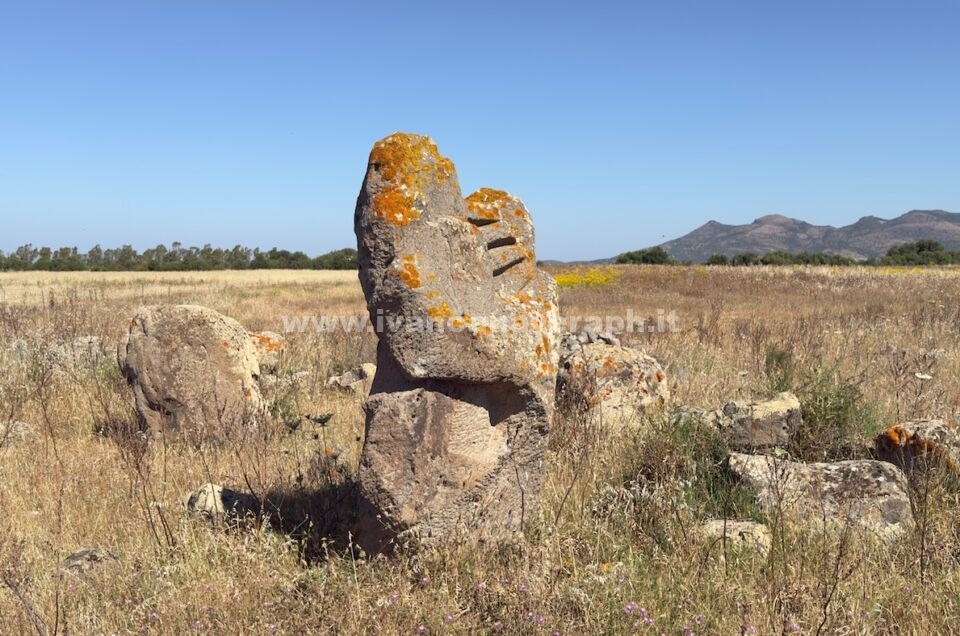
The central stele is the most spectacular element. In the oldest tombs, of “dolmenic” type, this monolithic slab can reach impressive heights. The central stele, often finely carved, could reach even 4 meters in height. At its base, a small rectangular opening represents the “door to the afterlife,” through which offerings to the deceased were introduced. Every time I observe this small opening, I cannot help but imagine the hands that made food, drinks, precious objects destined for the dead slide through it.
The symbolism of the exedra has been the subject of numerous interpretations. Some scholars see in it the representation of a bull’s horns, a sacred animal in Nuragic cosmogony linked to fertility and rebirth cults. Others interpret the semicircular form as the evocation of a female figure giving birth, symbol of the Mother Goddess who welcomes the deceased to make them reborn in the afterlife. Personally, I find both interpretations fascinating, which do not exclude each other but complete each other in a complex and stratified symbolic framework.

The tomb body, apsidal, can be over 15 meters long, as in the case of the majestic Sa Domu ‘e S’Orcu. This long funerary chamber was the place of actual burial, where skeletal remains were deposited after excarnation. The practice of collective burial testifies to a community conception of death, where the individual integrated into the group even after death.
Astronomical orientation is another element of great interest. Many tombs are oriented towards South-East, often in the direction of the rising of the constellation Taurus, confirming the importance of this animal in Nuragic religiosity. During my dawn surveys, I have been able to personally verify how the light of the rising sun spectacularly illuminates the interior of some tombs, creating light effects that must have had a precise ritual meaning.
👉 Per i miei viaggi mi affido sempre a Discoverycars per il noleggio auto. Se vuoi viaggiare senza pensieri, ti consiglio questa società: clicca sull’immagine e scopri di più!
👉 I always choose Discoverycars for my trips. If you want to travel safely and worry-free, I highly recommend them – just click the image to learn more!
👉 En mis viajes siempre confío en Discoverycars para alquilar el coche. Si quieres viajar con tranquilidad, te recomiendo esta compañía: haz clic en la imagen y descubre más.

🎭 Rites and Cults in the Giants’ Tombs
Imagining the rites that took place at the Giants’ Tombs is like opening a window onto a distant but incredibly fascinating spiritual world. During my research, I have collected clues and testimonies that have allowed me to reconstruct, at least partially, the complex rituality that animated these sacred places.
The funerary ritual of the Nuragic era, while still at the center of academic debates, seems to be characterized by a series of elaborate practices that involved the entire community. It was not simply about burying the dead, but accompanying them on a journey to the afterlife through ceremonies that could last days or even weeks.

The first aspect that strikes is the practice of excarnation. Bodies were left to decompose naturally, probably in specific places, before the bone remains were transferred to the funerary chamber. This process, which may seem macabre to us moderns, actually had a profound spiritual meaning: freeing the soul from the body to allow it to reach the afterlife. During my visits to the tombs, I have often reflected on how important this moment of passage must have been for the community.
The exedra served as a natural theater for ceremonies. Here community members gathered for commemoration rites, ritual meals in honor of ancestors, propitiatory offerings. The semicircular arrangement allowed all participants to see and hear what was happening at the center, creating a sense of collective participation that must have been very intense. When I position myself in the exedra and imagine these scenes, I always feel a thrill of emotion.
Offerings to the deceased were an essential component of the ritual. Through the small opening at the base of the central stele, the living made food, drinks, personal objects, and amulets destined for the dead slide through. This practice testifies to the belief in an afterlife where the deceased needed material sustenance. Archaeological excavations have brought to light ceramics, bronze tools, ornaments that confirm the richness of these grave goods.
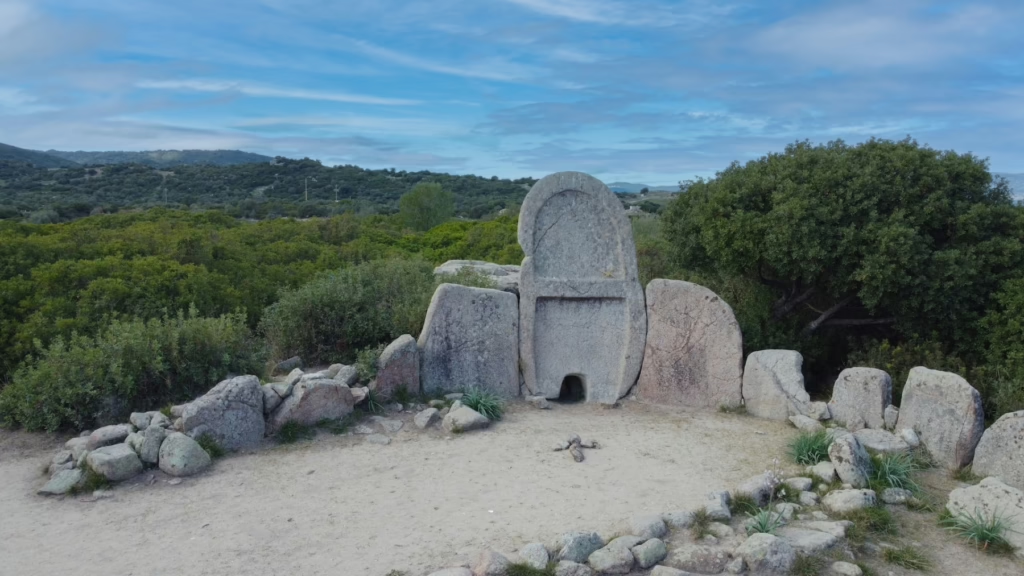
The cult of the Bull God and Mother Goddess seems to be central in the spirituality linked to the Giants’ Tombs. The bull, symbol of strength and fertility, was probably associated with the cycle of life and death, while the Mother Goddess represented the generative principle that allowed rebirth. Many decorations on the stelae recall these symbols, creating an iconographic language that must have been immediately understandable to the faithful of the time.
The astronomical orientation of the tombs also suggests the existence of rites linked to celestial cycles. The rising of certain constellations, lunar phases, solstices must have marked specific ritual moments during the year. This astronomical dimension once again confirms the high cultural level reached by the Nuragic civilization and its ability to integrate scientific observation and religious practice.
🗿 The Giants’ Tomb Sa Domu de Sorci in Siddi
Among all the Giants’ Tombs I have had the privilege of visiting, Sa Domu de Sorci (or more correctly Sa Domu ‘e S’Orcu) in Siddi occupies a special place in my heart as a passionate student of Sardinian archaeology. On the plateau of Giara di Siddi stands one of the largest and best-preserved “Giants’ Tombs” in Sardinia, fascinating from its very name: Sa Domu ‘e S’Orcu, “the house of the ogre.”
The name itself evokes a world of legends and popular superstitions that have stratified over the centuries. “Sa Domu ‘e S’Orcu” literally means “the house of the ogre,” and reflects the reverential fear that this imposing monument aroused in local populations. During my conversations with village elders, I have collected orally transmitted stories that describe this place as the dwelling of supernatural creatures, testimony to how the mysterious fascination of these monuments continues to live in the collective imagination.
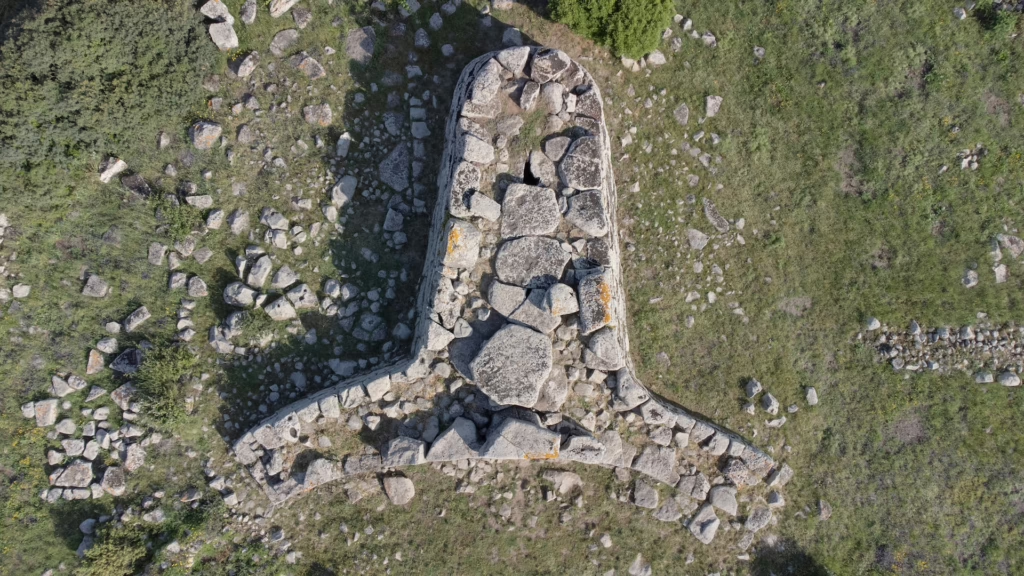

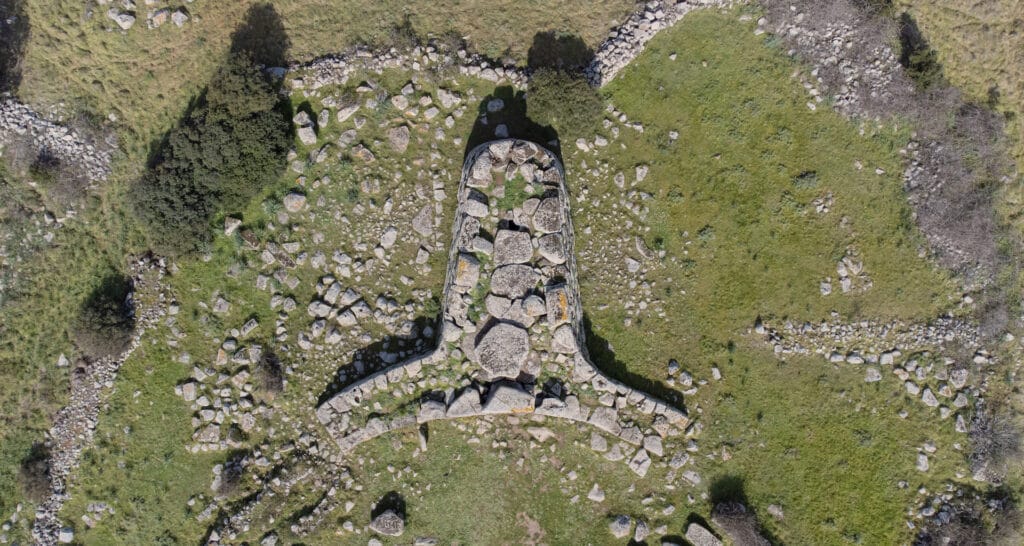

Dating to the Middle Bronze Age (1500-1300 BC), the Giants’ Tomb of Sa Domu ‘e S’Orcu is located at an altitude of about 260 meters on the plateau of Giara di Siddi, in an area that testifies to the intense Nuragic settlement of the territory. The strategic position, on a plateau that dominates the valley below, is not random: from here the gaze spans for kilometers, creating a visual and symbolic connection between the tomb and the entire territory controlled by the community.
It is a majestic monument, excellently preserved. It is a tomb of the type with front exedra in rows, with the tomb body, apsidal, arranged along the SE-NW axis, 15.20 meters long. When I first found myself in front of this structure, I felt a sense of awe: the dimensions are truly impressive, and the quality of construction testifies to the extraordinary skill of Nuragic master builders.
The exedra of Sa Domu ‘e S’Orcu is particularly spectacular. The rows of stones are arranged with millimetric precision, creating a perfect curve that seems to symbolically embrace anyone who approaches the monument. At the center of the exedra, the remains of the central stele testify to the original presence of this fundamental element, probably collapsed over the centuries due to atmospheric agents or human intervention.
The tomb body presents unique characteristics that distinguish it from other Giants’ Tombs. The masonry work consists of perfectly worked blocks, which fit together with such precision as to make the structure seem like a natural monolith rather than a human artifact. The funerary chamber, over 15 meters long, must have contained the remains of hundreds of individuals, testifying to the importance of this site for the Nuragic communities of the area.
During my visits to Sa Domu ‘e S’Orcu, I have always dedicated time to observing construction details. The technique of perfect interlocking, without the use of mortar, guarantees structural stability that has allowed the monument to cross millennia practically intact. Some blocks show signs of working that testify to the use of precision metal tools, confirming the high technological level reached by the Nuragics.
The surrounding environment is equally suggestive. The Giara di Siddi, with its typically Mediterranean vegetation and the remains of other Nuragic monuments visible on the horizon, recreates the atmosphere of a sacred landscape where every element probably had a symbolic meaning. The territory is characterized by the presence of fourteen nuraghi, testimony to a widespread settlement that makes this area one of the richest and most significant archaeological sites in central-southern Sardinia.
👉 Per i miei viaggi mi affido sempre a Discoverycars per il noleggio auto. Se vuoi viaggiare senza pensieri, ti consiglio questa società: clicca sull’immagine e scopri di più!
👉 I always choose Discoverycars for my trips. If you want to travel safely and worry-free, I highly recommend them – just click the image to learn more!
👉 En mis viajes siempre confío en Discoverycars para alquilar el coche. Si quieres viajar con tranquilidad, te recomiendo esta compañía: haz clic en la imagen y descubre más.
🏛️ Is Concias in Quartucciu: Jewel of Southern Sardinia
Among the archaeological wonders of southern Sardinia, the Giants’ Tomb Is Concias in Quartucciu represents an extraordinary example of how the Nuragic civilization was able to adapt its construction traditions to the different territorial characteristics of the island. During my research in Sarrabus, this tomb immediately stood out for its architectural peculiarities and exceptional state of preservation.
The archaeological site of Is Concias is located on the western slopes of the Sarrabus mountains, a short distance from the Riu San Pietro, in a position that testifies to the Nuragics’ ability to carefully choose places destined for their funerary monuments. The proximity to the watercourse is not random: water had a sacred meaning in ancient cultures, symbol of purification and passage between worlds.


What struck me most about Is Concias is its construction typology, which distinguishes it from the more northern tombs of the island. It is in fact a tomb with architraved entrance, an architectural variant that testifies to the evolution and diversification of Nuragic construction techniques in time and space. This characteristic makes it particularly interesting for understanding the development processes of funerary architecture on the island.
The structure presents a well-preserved exedra, where it is still possible to appreciate the mastery of Nuragic builders in the art of stone working. The blocks, extracted from local quarries, have been worked with precision that testifies to the use of specialized tools and the presence of highly qualified craftsmen. During my surveys, I have been able to observe closely the working signs on the stone, which tell of techniques handed down from generation to generation.
The orientation of Is Concias follows the traditional canons of the Giants’ Tombs, with the facade facing South-East. This choice, common to most similar monuments, confirms the existence of precise astronomical and religious rules that guided the construction of these sacred buildings. The alignment with the sunrise in certain periods of the year must have had a specific ritual meaning, probably linked to the cycles of nature and death-rebirth.
The territory surrounding Is Concias is rich in Nuragic testimonies, from nuraghi to villages, from sacred fountains to places of worship. This concentration of monuments testifies to the strategic and symbolic importance of the area in the Nuragic settlement system. During my explorations in the surroundings, I have been able to mentally reconstruct the ancient landscape, populated by communities that had made this territory a religious and civil center of primary importance.
The tomb of Is Concias also represents a significant example of how Nuragic monuments integrate perfectly into the natural landscape. The choice of site, the arrangement of the structure, the use of local materials create a harmony between architecture and environment that is one of the most fascinating characteristics of Nuragic civilization. Every time I visit this site, I am struck by this capacity to create monuments that seem to have always existed in that place.
The importance of Is Concias goes beyond its intrinsic archaeological value. This monument represents an ideal bridge between the different areas of Nuragic Sardinia, testifying to the cultural unity of a civilization that was able to maintain its distinctive characteristics while adapting to local specificities. For those like me who study ancient Sardinia, Is Concias is a fundamental piece for understanding the complexity and richness of Nuragic culture.
⚱️ The Giants’ Tomb of Ilio in Sedilo
In the heart of the island, in the territory of Sedilo, stands one of the most fascinating and least known Nuragic funerary monuments: the Giants’ Tomb of Ilio. During my explorations in the Sardinian hinterland, this tomb has proved to be an extraordinary discovery, capable of offering unique insights into the variety and complexity of Nuragic funerary architecture.
The position of Ilio is emblematic of the Nuragic settlement strategy. Located on a height that dominates the valley below, the tomb enjoys a panoramic view that spans for kilometers, creating a visual connection with other Nuragic monuments in the area. This topographical choice was never random: the Nuragics knew that the position of a tomb had to be symbolically significant, visible from afar, capable of marking the territory as a place sacred to the memory of ancestors.

The structure of Ilio presents peculiar architectural characteristics that distinguish it from other Giants’ Tombs. The exedra, while following the canonical semicircular model, shows construction details that testify to the adaptation of standard techniques to the specificities of the site and locally available materials. During my surveys, I noticed how the builders were able to exploit the natural characteristics of the terrain to perfectly integrate the monument into the surrounding environment.
The tomb body of Ilio still preserves today a significant part of its original structure, allowing appreciation of the considerable dimensions of this funerary monument. The sepulchral chamber, several meters long, must have housed the remains of numerous members of the local community, testifying to the importance of this site in the religious and social system of the area.
One of the most interesting aspects of Ilio is its relationship with the surrounding sacred landscape. In the vicinity are in fact other Nuragic monuments, from nuraghi to sacred wells, which together with the tomb created a complex system of interconnected places of worship. This network of monuments testifies to the existence of a well-structured sacred geography, where each element had a specific role in the overall religious system.
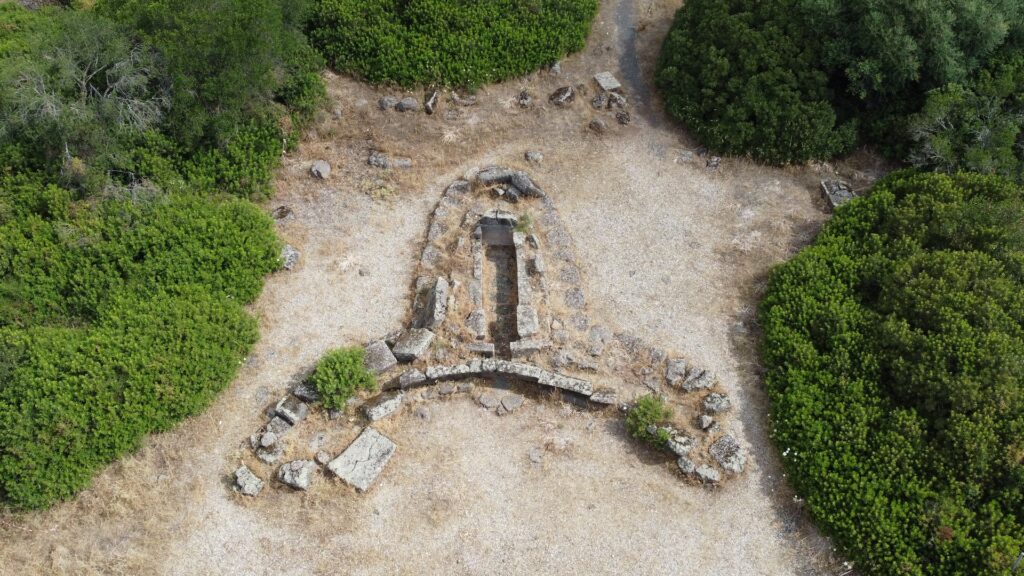
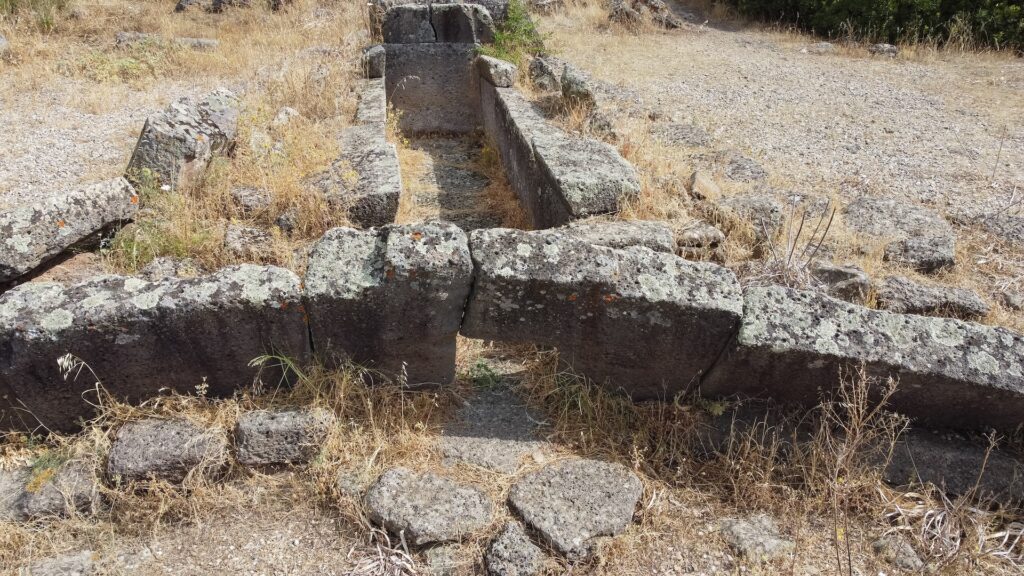

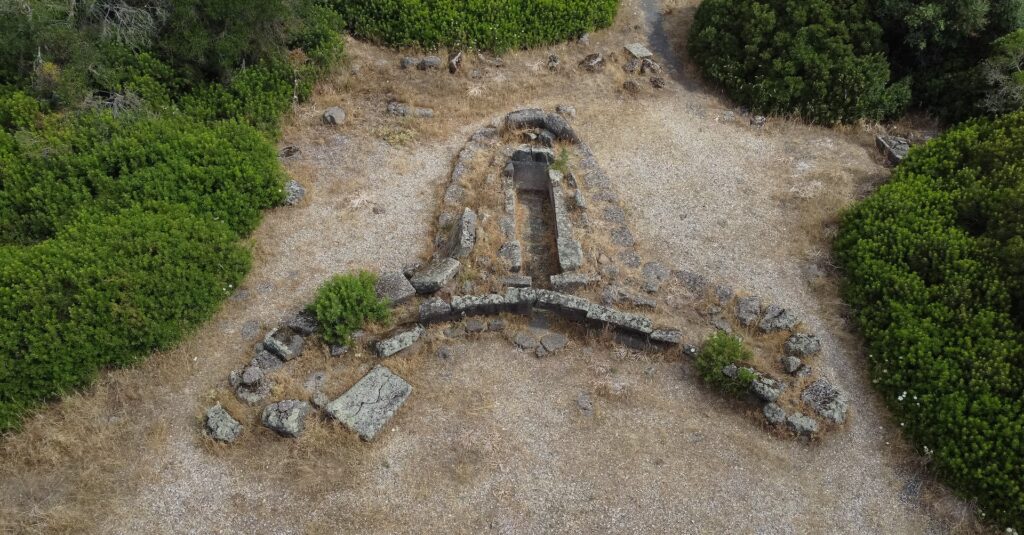
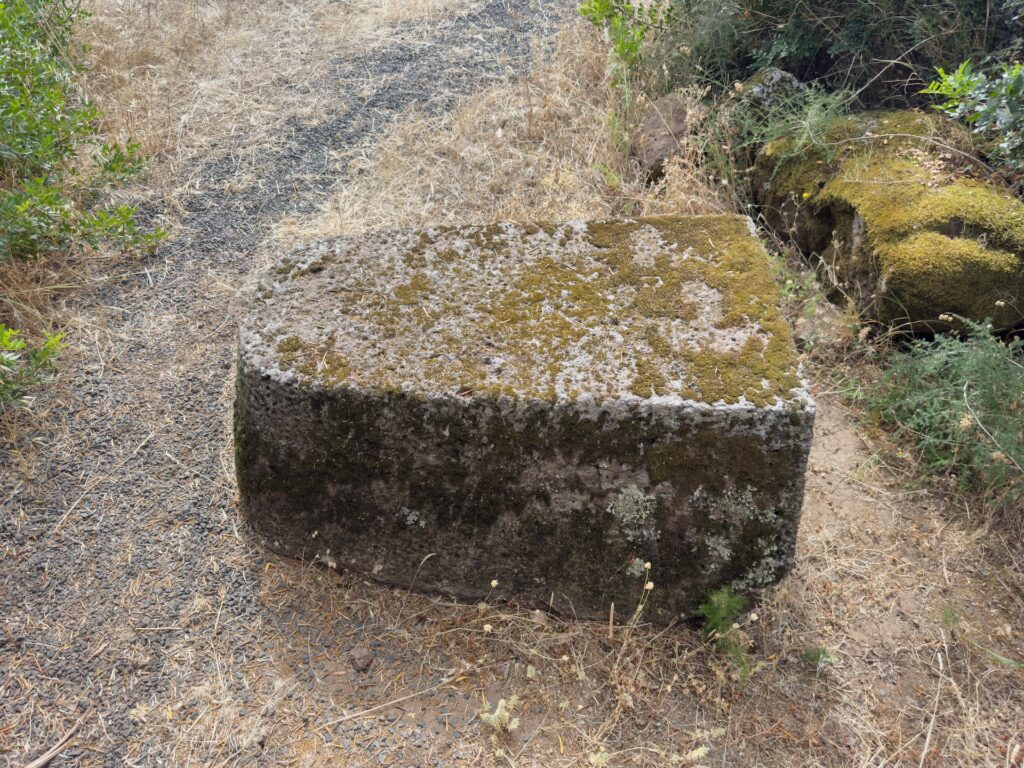
During my visits to Ilio, I have always dedicated particular attention to observing the monument’s orientation and its relationship with astronomical phenomena. Like many other Giants’ Tombs, Ilio also seems to follow precise rules of celestial alignment, confirming the importance of astronomy in Nuragic culture. Sky observation was not only a scientific practice, but a fundamental element of ancient religiosity.
The tomb of Ilio also represents a significant example of how Nuragic monuments managed to maintain their symbolic function even after the end of the civilization that had created them. Subsequent populations continued to consider this place as sacred, handing down legends and traditions that, while transforming over time, kept alive the memory of the importance of this site.
The accessibility of Ilio and its location in the territory of Sedilo make it an ideal destination for those who want to deepen their knowledge of Nuragic civilization away from the most beaten tourist circuits. The tranquility of the place allows a reflective visit, capable of immersing the visitor in the ancient atmosphere and making them perceive the sacredness that this monument continues to emanate after millennia from its construction.
🌟 The Giants’ Tomb Meda at Fonti and Coddu Vecchiu in Arzachena
In the territory of Arzachena, in the heart of Gallura, some of the most spectacular examples of Nuragic funerary architecture in all of Sardinia are concentrated. During my explorations in this area of the island, I have had the fortune to closely study monuments that represent the pinnacle of Nuragic construction art, among which the celebrated Coddu Vecchiu stands out.
The territory of Arzachena has three Giants’ Tombs: that of Coddu Vecchiu, near the nuraghe la Prisgiona, and those of Capichera and Li Lolghi. This exceptional concentration of funerary monuments testifies to the strategic and symbolic importance of this area in the Nuragic sacred geography. Gallura, with its granitic landscapes and its position controlling sea routes, must have been a territory of primary importance for Nuragic communities.
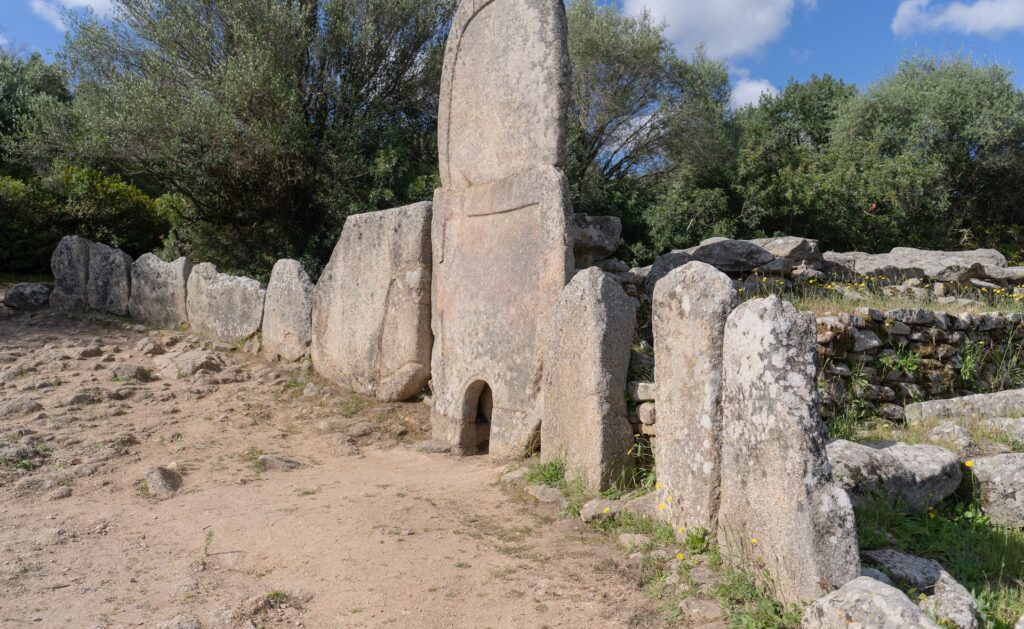


Coddu Vecchiu is undoubtedly one of the most spectacular and best-preserved Giants’ Tombs in all of Sardinia. The first time I found myself in front of this monument, I was literally breathless. The central stele, over 4 meters high, rises majestically at the center of the exedra like a stone giant watching over the remains of ancestors. Its surface, finely worked, presents decorations that testify to the high artistic level reached by the Nuragics.
The exedra of Coddu Vecchiu is a masterpiece of engineering and architecture. The granitic blocks, extracted from local quarries, have been worked and positioned with millimetric precision that testifies to the existence of specialized workforces and techniques handed down through generations of builders. The perfect curvature of the semicircle, the balance of weights, the structural stability are the result of extraordinary technical skills for the era.
The central stele of Coddu Vecchiu deserves an in-depth analysis. 4.04 meters high and 2.25 meters wide at the base, this imposing granitic slab presents at its base the characteristic semicircular opening, the “door to the afterlife” through which offerings to the deceased were passed. The surface of the stele is decorated with geometric and symbolic motifs that recall cosmic and religious elements of Nuragic culture.
The tomb body of Coddu Vecchiu extends for over 10 meters behind the exedra, creating a long funerary chamber that must have contained the remains of hundreds of individuals. The construction technique, based on the perfect interlocking of granitic blocks without the use of mortar, guarantees stability that has allowed the monument to cross millennia practically intact. During my surveys, I have been able to personally verify the precision of this technique, which represents one of the pinnacles of Nuragic construction art.
The orientation of Coddu Vecchiu follows the astronomical rules typical of Giants’ Tombs, with the facade facing South-East. This choice is not random but responds to precise ritual needs linked to the observation of celestial cycles. The sunrise in certain periods of the year must have illuminated the interior of the tomb spectacularly, creating light effects that probably had a sacred meaning for funeral ceremonies.
The landscape surrounding Coddu Vecchiu is equally fascinating. The characteristic granitic “tafoni” of Gallura, modeled by wind and water over millennia, create a surreal environment that seems made especially to welcome these mysterious monuments. The typically Mediterranean vegetation, with its fragrances and colors, completes a picture of extraordinary beauty that makes the visit to Coddu Vecchiu an unforgettable experience.
The tomb of Li Lolghi, also in the territory of Arzachena, presents characteristics similar to Coddu Vecchiu but with some interesting variants. During my comparative studies, I have noticed how these monuments, while following a common architectural model, always present local specificities that testify to the adaptation of standard techniques to the characteristics of the site and available materials.
🏺 Spiritual and Cultural Significance
After years of study and reflection on these extraordinary monuments, I have come to the conviction that the Giants’ Tombs represent much more than simple burials: they are the physical manifestation of a complex and deeply spiritual worldview that characterized Nuragic civilization.
The concept of death in Nuragic culture was evidently very different from that of contemporary Mediterranean civilizations. The choice to use collective burials, where the remains of hundreds of individuals mixed over time, testifies to a community conception of the afterlife. It was not the single individual who survived death, but the community as a whole, through the symbolic fusion of ancestral remains.
The practice of excarnation, which preceded the final deposition of bone remains in the funerary chamber, had a profoundly spiritual meaning. It was not a practice dictated by hygienic needs, but a true purification ritual that allowed the soul to completely free itself from the material body to reach the afterlife. This process, which could last months or even years, kept alive the relationship between the living and the dead, creating a continuous bridge between the two worlds.

The very architecture of the Giants’ Tombs is imbued with religious symbolism. The semicircular exedra recalls the shape of the maternal womb, symbol of rebirth and regeneration. The Mother Goddess, central divinity in the Nuragic pantheon, welcomed the deceased into her womb to make them reborn in a superior spiritual dimension. This interpretation is confirmed by the presence, in many tombs, of decorations that recall female symbols of fertility.
The cult of the Bull, another central element in Nuragic religiosity, finds in the Giants’ Tombs one of its most evident expressions. The orientation towards the constellation Taurus, the shape of horns evoked by the exedra, the taurine symbols present on many stelae are all elements that testify to the importance of this divinity in the Nuragic religious system. The Bull represented vital force, generative power, the masculine principle that united with the feminine one of the Mother Goddess in a dual theological system.
The ceremonies that took place at the Giants’ Tombs must have been events of extraordinary emotional and spiritual intensity. The entire community gathered in the exedra to participate in commemoration rites, ritual meals, offerings to ancestors. These moments served not only to honor the dead, but also to strengthen social bonds among the living, to transmit values and traditions, to keep alive the cultural identity of the group.
The astronomical dimension of these monuments confirms the existence of a priestly class specialized in knowledge of celestial cycles. The precise orientation towards certain constellations, alignment with solstices and equinoxes, synchronization of ceremonies with astronomical phenomena testify to a level of scientific knowledge very advanced for the era.

The Giants’ Tombs also represent a formidable instrument of territorial control. Their widespread distribution throughout the Sardinian territory, their position on dominating heights, their visibility at great distance made them territorial markers that defined the boundaries of different communities. Whoever controlled a Giants’ Tomb also controlled the surrounding territory, because possession of these sacred places conferred political and religious legitimacy.
📍 Territorial Distribution and Archaeological Importance
The distribution of Giants’ Tombs on Sardinian territory reveals fundamental aspects of the social and territorial organization of Nuragic civilization. During my cartographic studies and field explorations, I have been able to verify how these monuments follow precise settlement logics that testify to the existence of a complex and well-structured social system.
With 1,434 tombs surveyed throughout the island’s territory, Sardinia presents the highest concentration of megalithic funerary monuments in the entire Mediterranean area. This exceptional density is not random but reflects the central importance that death and ancestor worship had in Nuragic society. Every community, even the smallest, must have had its own Giants’ Tomb, which served as a religious and identity reference point.

The geographical distribution shows some interesting concentrations. Gallura, with extraordinary monuments like Coddu Vecchiu and Li Lolghi, represents one of the richest areas. Logudoro and Marghine also present a notable density of tombs, while in the internal mountainous areas the presence is more rarefied but still significant. This distribution probably reflects the different demographic density of the various areas of the island in the Bronze Age.
The archaeological importance of the Giants’ Tombs goes well beyond their intrinsic value as funerary monuments. These sites have provided, and continue to provide, precious information about daily life, religious beliefs, social organization, construction techniques, cultural contacts of Nuragic civilization. Archaeological excavations have brought to light grave goods, ceramics, metal objects, ornaments that allow reconstruction of fundamental aspects of this ancient civilization.
Modern excavation techniques, applied to the Giants’ Tombs, are revealing increasingly precise details about Nuragic funerary rituals. Analysis of skeletal remains provides information about demography, health, nutrition, medical practices of ancient populations. The study of pollen preserved in the soil allows reconstruction of the plant environment of the era, while chemical analyses of sediments reveal traces of substances used in funeral rites.

The dating of Giants’ Tombs, made possible by modern radiometric analysis techniques, has allowed establishment of a precise chronology of these monuments. The oldest date back to the Ancient Bronze Age (1800-1600 BC), while the most recent are datable to the Final Bronze Age (1200-900 BC). This long duration testifies to the stability and continuity of Nuragic funerary tradition across centuries.
The integration of Giants’ Tombs into the Nuragic monumental system is another aspect of great archaeological interest. Many tombs are associated with nuraghi, villages, sacred wells, creating archaeological complexes of extraordinary richness. These integrated sites allow reconstruction of the territorial and social organization of Nuragic communities with a level of detail unthinkable until a few decades ago.
The Giants’ Tombs also represent a heritage at risk that requires urgent protection and enhancement interventions. Natural erosion, anthropic action, urban development threaten many of these monuments. Their conservation is fundamental not only for their intrinsic archaeological value, but also for their function as witnesses of a civilization that was able to create works of extraordinary beauty and spiritual meaning.
Archaeological research on Giants’ Tombs is in continuous evolution. New discoveries, new investigation techniques, new interpretations constantly enrich our knowledge of these extraordinary monuments. Every excavation, every study, every analysis contributes to revealing new aspects of a civilization that continues to amaze for its complexity and modernity.
🎯 Conclusions: The Eternal Legacy of the Giants’ Tombs
After this long journey through the history, architecture, symbolism, and archaeological importance of the Giants’ Tombs, I feel I can affirm that these monuments represent one of the most extraordinary and fascinating testimonies of Nuragic civilization. They are not simply ancient burials, but true books of stone that tell the story of a people capable of creating works of extraordinary beauty and spiritual depth.
The Giants’ Tombs teach us that death, in Nuragic culture, was not seen as an end but as a transformation. The deceased were not forgotten but continued to live in collective memory, to guide community choices, to protect the territory through their spiritual presence. This conception of death as passage to a superior dimension testifies to the philosophical and religious maturity reached by this ancient civilization.
The architecture of these monuments reveals extraordinary technical and artistic skills. The ability to work enormous blocks of stone, to transport and position them with millimetric precision, to create stable and lasting structures testifies to the existence of specialized workforces and a social system capable of mobilizing the resources necessary for works of such complexity. Every Giants’ Tomb is a masterpiece of engineering and art that continues to amaze even today.
The religious symbolism of these monuments opens a window onto a rich and complex spiritual world. The cult of the Bull and Mother Goddess, astronomical orientation, passage rites testify to the existence of a sophisticated theological system that integrated scientific observation and religious practice. The community dimension of death, expressed through collective burials, reveals a society where the individual found their meaning in belonging to the group.
The territorial importance of the Giants’ Tombs confirms their role as identity markers and territorial control. These monuments were not only places of worship but also symbols of power and belonging that defined the boundaries of different communities. Their widespread distribution testifies to the existence of an articulated and well-organized social system.
From an archaeological point of view, the Giants’ Tombs continue to provide precious information about Nuragic civilization. Every excavation, every study, every analysis contributes to revealing new aspects of this extraordinary culture. Modern investigation techniques allow reconstruction with ever-greater precision of daily life, beliefs, practices of this ancient people.

The conservation of these monuments represents a challenge and responsibility for present and future generations. The Giants’ Tombs are heritage not only of Sardinia but of all humanity, unique testimonies of a civilization that was able to create works of extraordinary beauty and meaning. Their protection and enhancement must be an absolute priority.
The legacy of the Giants’ Tombs goes beyond their archaeological and historical value. These monuments teach us respect for ancestors, the importance of collective memory, the value of community, the search for meaning in human existence. They are life lessons that maintain their relevance even in the modern world.
Visiting a Giants’ Tomb means entering contact with the deepest dimension of human experience: the search for meaning, the relationship with death, the need for transcendence. These monuments continue to emanate a sacredness that transcends time and speaks directly to the human soul.
The Enduring Message
The Giants’ Tombs stand as silent witnesses to humanity’s eternal quest for meaning beyond mortality. In their weathered stones lies encoded the wisdom of a civilization that understood death not as termination, but as transformation. They remind us that true immortality lies not in the preservation of the physical form, but in the lasting impact we leave on our communities and the memories we create.
These monuments challenge our modern understanding of progress and sophistication. The Nuragic people, without the technological tools we consider essential, created structures that have endured for millennia, embodying principles of engineering, artistry, and spiritual insight that continue to inspire awe. They achieved a harmony between the practical and the transcendent that modern society often struggles to attain.
The Giants’ Tombs also speak to the fundamental human need for belonging and continuity. In an age of increasing individualism and disconnection, these collective burial sites remind us of the strength found in community, the importance of shared identity, and the profound meaning that emerges when individual lives contribute to something greater than themselves.

A Call to Preservation and Understanding
As we stand before these ancient monuments, we are called not merely to admire their antiquity, but to understand their relevance to our contemporary world. The Giants’ Tombs challenge us to consider what legacy we wish to leave, what values we want to embed in stone and memory for future generations to discover.
The preservation of these sites requires more than physical conservation; it demands a commitment to understanding and respecting the wisdom they contain. Each visitor, each researcher, each guardian of these monuments becomes part of their continuing story, ensuring that the voices of the ancient Nuragic people continue to resonate across the centuries.
In the end, the Giants’ Tombs represent more than archaeological curiosities or tourist destinations. They are profound statements about the human condition, testaments to our capacity for greatness, and enduring symbols of our shared heritage as beings who seek meaning, create beauty, and strive to transcend the limitations of mortal existence.
The giants may be long gone, but their tombs continue to speak, offering timeless lessons about life, death, community, and the eternal human quest for significance. In preserving and understanding these monuments, we honor not only the Nuragic civilization but the best aspirations of humanity itself.
Le tombe dei giganti in Sardegna sono affascinanti testimonianze dell’età nuragica e rappresentano un capitolo importante della storia dell’isola. Ecco alcune delle più importanti:
- Li Lolghi: Arzachena, queste tombe sono caratterizzate da blocchi di pietra e forme rettangolari absidate.
- Coddu Veccia: La tomba dei giganti di Coddu Vecchiu è un importante sito archeologico nuragico situato nel territorio del comune di Arzachena
- Pascaredda: Trovata a Calangianus, questa tomba presenta una camera funeraria lunga e stretta.
- Sa Domu e S’orcu: La tomba di giganti di Sa Domu e S’orcu un monumento archeologico situato ad un’altezza di circa 260 metri nell’altopiano della giara di Siddi.
- Tamuli: Trovata a Macomer, questa tomba presenta una struttura simile a una nave capovolta.
- S’Ena e Thomes: è un sito archeologico di epoca nuragica situato nel comune di Dorgali
- Aiodda: Situata a Nurallao, questa tomba è un altro esempio di tombe dei giganti.
- San Cosimo: nel territorio di Gonnosfanadiga considerata la più estesa fra le Tombe dei Giganti conosciute
- Barrancu Mannu Santadi: La tomba di Barrancu Mannu, o di “Sa Tuerredda”, presenta il classico schema planimetrico delle tombe di giganti
- Su Niu de Su Crobu: La tomba dei giganti si trova a Sant’antioco vicino al complesso nuragico di Grutt’i Acqua
Se ti piacciono queste immagini puoi acquistarle “cliccando QUI” oppure “QUI”
👉 Per i miei viaggi mi affido sempre a Discoverycars per il noleggio auto. Se vuoi viaggiare senza pensieri, ti consiglio questa società: clicca sull’immagine e scopri di più!
👉 I always choose Discoverycars for my trips. If you want to travel safely and worry-free, I highly recommend them – just click the image to learn more!
👉 En mis viajes siempre confío en Discoverycars para alquilar el coche. Si quieres viajar con tranquilidad, te recomiendo esta compañía: haz clic en la imagen y descubre más.


You might also like