
🏛️ The Nuragic Civilization: Origins of the Stone Giants
Sardinia holds one of the most captivating archaeological treasures in the Mediterranean: the Nuraghi. These monumental megalithic towers, built between the 18th and 2nd centuries BC, are the most significant legacy of the Nuragic civilization, a unique culture that flourished on the island for over a millennium.
Shaped like truncated cones and built using huge local stones without mortar (dry stone technique), these towers display remarkable stability. Their tapering form has allowed them to withstand the elements for thousands of years.
👉 Per i miei viaggi mi affido sempre a Discoverycars per il noleggio auto. Se vuoi viaggiare senza pensieri, ti consiglio questa società: clicca sull’immagine e scopri di più!
👉 I always choose Discoverycars for my trips. If you want to travel safely and worry-free, I highly recommend them – just click the image to learn more!
👉 En mis viajes siempre confío en Discoverycars para alquilar el coche. Si quieres viajar con tranquilidad, te recomiendo esta compañía: haz clic en la imagen y descubre más.


👉 Per i miei viaggi scelgo sempre DiscoverCars per il noleggio auto.
È affidabile, veloce e con ottime tariffe.
👉 I always choose DiscoverCars for my trips.
Reliable, fast and with excellent rates.

🔍 What Were the Nuraghi?
The Nuraghi served many roles in Nuragic society. Originally conceived as defensive structures, they were strategically placed to control valleys, plains, and key communication routes. But their importance extended beyond military function: they were centers of political, religious, and social power, and symbols of prestige for local elites.
The most important Nuraghi were surrounded by entire villages composed of circular huts, sacred wells, giant tombs, and communal buildings. These archaeological complexes reflect a stratified, organized society capable of impressive engineering feats and thriving trade with other Mediterranean civilizations.
📊 Nuragic Civilization in Numbers
There are around 7,000 catalogued Nuraghi across Sardinia, making it the island with the highest density of megalithic monuments in the world. The most imposing of these reach over 20 meters in height and include complex features such as internal courtyards, bastions, and advanced defense systems. They are spread throughout the island, revealing a civilization with widespread territorial control.
🏰 Su Nuraxi of Barumini: Sardinia’s UNESCO Gem
🌟 A World Heritage Site – Su Nuraxi
Su Nuraxi in Barumini is the pinnacle of Nuragic architecture and has been a UNESCO World Heritage Site since 1997. Located in South Sardinia, it’s the most famous and best-preserved Nuraghe on the island.
The vast archaeological site includes a central tower, a labyrinth of bastions and courtyards, and an expansive village. The 18-meter-tall main tower dominates the structure, showcasing the Nuragic people’s remarkable engineering. The walls, over 3 meters thick at the base, have endured more than 3,000 years of history.
🏛️ Architecture and Discoveries
Su Nuraxi demonstrates sophisticated urban planning. The main tower is surrounded by a four-tower bastion, and the village includes more than 50 huts from various periods, indicating continuous habitation from the 15th century BC through Roman times.
Excavations led by archaeologist Giovanni Lilliu in the 1950s unearthed artifacts such as pottery, bronze objects, jewelry, and tools that reveal aspects of daily life, religious practices, and far-reaching trade.
⛰️ Santu Antine of Torralba: The Giant of Logudoro
🏔️ The Majesty of the “Stone King” – Santu Antine
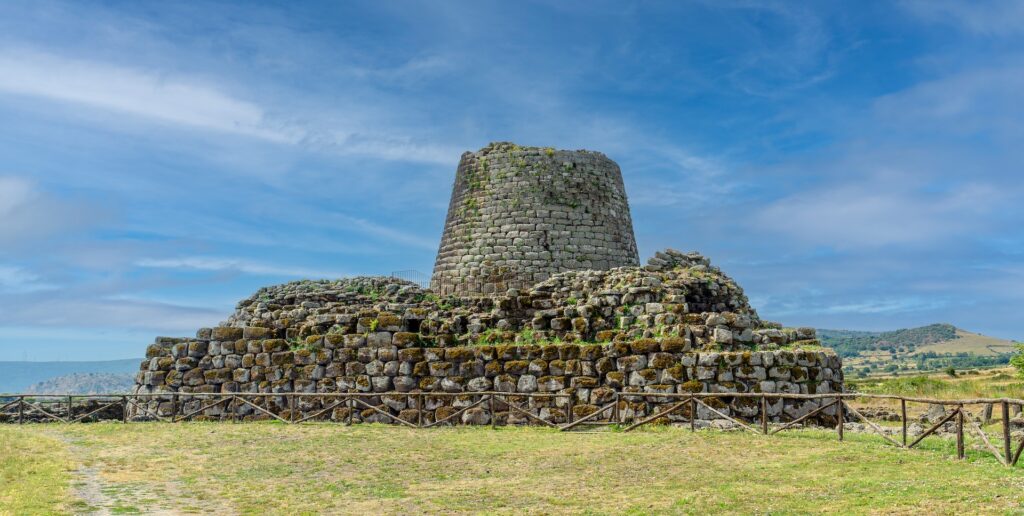
In the heart of Logudoro, in the province of Sassari, stands the majestic Nuraghe Santu Antine, known as Sa domo de su re (“the king’s house”). With its preserved height of 17 meters, it’s one of the most imposing and spectacular Nuraghi in Sardinia.
Built around the 16th century BC, the trilobed complex rises over the fertile plains of Torralba. The original height of the central tower likely reached 22–24 meters, making it one of the tallest Nuraghi ever built. The massive stones, some weighing several tons, showcase the organizational strength of Nuragic society.
🔧 Engineering and Innovation
Santu Antine features three connected towers, internal courtyards, and a staircase system accessing upper floors. The central tower retains three superimposed tholos chambers, masterpieces of dry-stone architecture.
Surrounding the tower is a large village with over 90 huts, some of which remained in use into Roman times. Furnaces, wells, and productive structures suggest that Santu Antine was a major economic and artisanal hub.
🌿 Nuraghe Losa of Abbasanta: The Harmony of Architectural Perfection
🎯 A Masterpiece of Balance – Nuraghe Losa
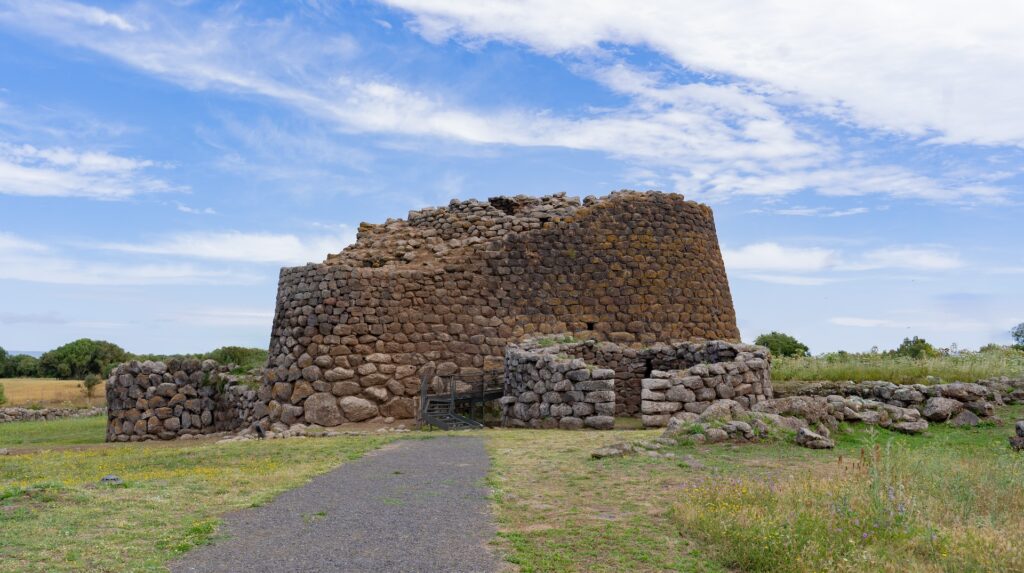
Located in Abbasanta (Oristano province), Nuraghe Losa is considered one of the most elegant and well-proportioned Nuraghi. Built between the 15th and 13th centuries BC, it strikes a perfect balance between defensive utility and refined design.
Its most remarkable feature is its preserved condition and architectural harmony. The central tower (13 meters tall) is flanked by three smaller towers, forming a beautifully designed trilobed structure. The original tholos dome still tops the main tower.
🏗️ Construction Techniques and Layout
Nuraghe Losa is notable for its perfectly squared basalt blocks, fitted with astonishing precision. Inside, a network of staircases and corridors connects the different areas, while the inner courtyards served community and defensive functions.
The site also includes a Nuragic village, sacred wells, and water collection systems, highlighting the inhabitants’ mastery of resource management. It had a strategic position overlooking the fertile Abbasanta plain and internal trade routes.
🔴 Nuraghe Arrubiu of Orroli: The Red Colossus of Sardinia
🏛️ The Largest Nuragic Complex – Nuraghe Arrubiu
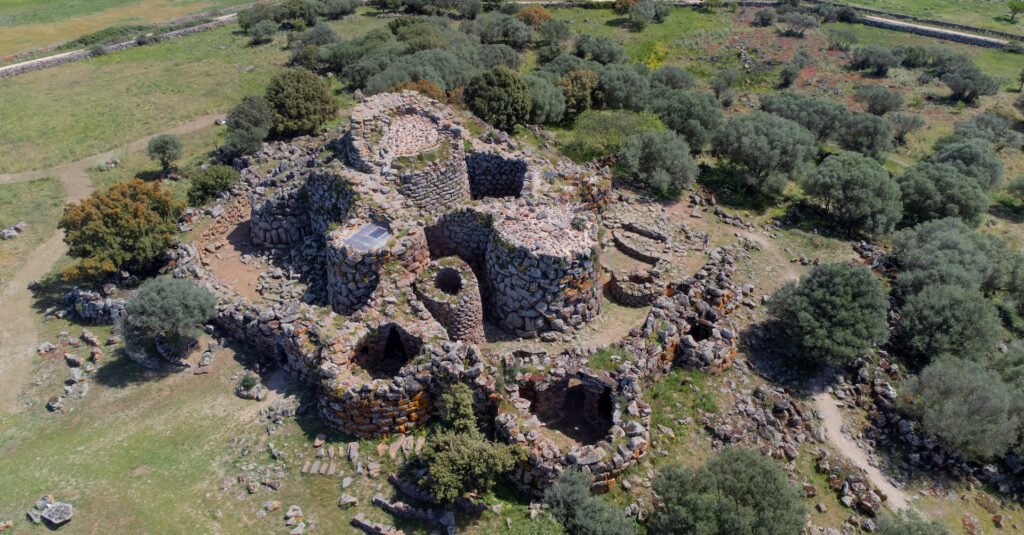
In the Barbagia di Seulo region, Nuraghe Arrubiu stands as the largest Nuragic complex in Sardinia. Its name, meaning “red” in Sardinian, comes from the reddish basalt stone used in its construction.
Built between the 14th and 13th centuries BC, it features 5 bastions and 7 towers, covering more than 5,000 square meters. Though partially collapsed, the central tower still stands 15 meters tall and originally exceeded 25 meters in height.
⚔️ Military Architecture and Territorial Control
Arrubiu’s defensive complexity is unparalleled, with concentric bastions, outer walls, and flanking towers forming a nearly impenetrable fortress.
Its elevated position overlooking the Flumendosa valley allowed for total territorial control. The site includes a vast village, sacred wells, and necropolises, indicating a large and prosperous community.
🌊 Nuraghe Seruci of Gonnesa: Guardian of the Southwestern Coast
🏖️ Between Sea and Mountains – Nuraghe Seruci
Near Gonnesa (South Sardinia), Nuraghe Seruci is a key example of coastal Nuragic architecture. Just a few kilometers from the sea, it guarded access routes between the coast and the mining-rich inland region of Sulcis.
Built around the 14th century BC, Seruci includes a central tower and bastions positioned on a hill, ideal for monitoring maritime traffic. Its location near ancient lead and zinc mines suggests a major role in the Nuragic mining economy.

⛏️ Resource Management and Metallurgy
Seruci reflects the Nuragic focus on mineral resources. The surrounding area was rich in metals mined and processed since the Bronze Age. The Nuragic people were expert metallurgists and traders, forming extensive networks across the Mediterranean.
The complex includes remains of huts, workshops, and burial areas. Archaeological finds such as slag, smelting furnaces, and tools confirm its economic significance over time, with use extending into the Roman era.
Di seguito un piccolo elenco dei complessi nuragici più belli della Sardegna
- Nuraghe Arrubiu (Orroli, CA): Conosciuto anche come Nuraghe Rosso per la sua colorazione vermiglia dovuta ai licheni rossi sulle mura. Le sue cinque torri principali lo rendono unico, e i reperti risalenti alla preistoria sono stupefacenti
- Su Nuraxi a Barumini: Questo è l’esempio più completo e meglio conservato di nuraghe. E’ stato dichiarato Patrimonio dell’Umanità UNESCO.La sua struttura complessa e la storia avvolta nel mistero lo rendono affascinante
- Complesso Nuragico di Palmavera (Alghero, SS): Vicino alla graziosa città di Alghero, questo complesso ha due torri principali e continua a rivelare segreti attraverso gli scavi in corso
- Il nuraghe Santu Antine: chiamato anche sa domo de su re, fa parte del complesso monumentale di Santu Antine di Torralba ed è uno dei nuraghi più maestosi e importanti dell’intera Sardegna.
- Nuraghe di Seruci (Su): Il complesso nuragico di Seruci è un importante sito archeologico dell’età del bronzo e del ferro, esteso sei ettari e situato nel territorio del comune di Gonnesa
- Nuraghe Losa di Abbasanta (Or): Costruito interamente in roccia basaltica, il nuraghe Losa è costituito da un mastio centrale e da un bastione trilobato a sua volta circondato da un antemurale
Se ti piacciono queste immagini puoi acquistarle cliccando QUIoppure QUI
👉 Per i miei viaggi mi affido sempre a Discoverycars per il noleggio auto. Se vuoi viaggiare senza pensieri, ti consiglio questa società: clicca sull’immagine e scopri di più!
👉 I always choose Discoverycars for my trips. If you want to travel safely and worry-free, I highly recommend them – just click the image to learn more!
👉 En mis viajes siempre confío en Discoverycars para alquilar el coche. Si quieres viajar con tranquilidad, te recomiendo esta compañía: haz clic en la imagen y descubre más.
❓ Frequently Asked Questions about Sardinia’s Nuraghi
🇬🇧 FAQ – English
- What exactly were the Nuraghi and when were they built?
Nuraghi were built between the 18th and 2nd centuries BC as defensive, political, and religious centers using massive stones without mortar. - How many Nuraghi exist and where can I visit them?
Sardinia has ~7,000 Nuraghi. Top sites: Su Nuraxi (UNESCO), Santu Antine, Losa, Arrubiu, Seruci. - What was their purpose?
Defense, governance, religion, and housing for elites. They often formed the core of Nuragic villages. - How were they built?
With dry stone masonry and tholos domes. Builders used massive basalt blocks, expertly fitted without mortar. - How should I plan a Nuraghi tour?
Visit 2–3 sites over a few days. Base yourself in Cagliari or Oristano. Book guided tours in advance.


You might also like