🗿 The Nuraghi in Sardinia: Stone Giants of an Ancient Civilization
Sardinia, a land of wild landscapes and crystal-clear sea, holds a unique archaeological treasure: the nuraghi. These imposing stone constructions, scattered across the island, are silent witnesses to a fascinating and mysterious civilization that prospered thousands of years ago. But what exactly are nuraghi? What was their purpose, and who were the people who erected them with such mastery?

🏺 A First Look: The Mystery of the Sardinian Nuraghi
Nuraghi represent one of the most fascinating and mysterious archaeological treasures of the Western Mediterranean. These megalithic monuments, unique in the world in their form and distribution, dot the Sardinian landscape with over 7,000 cataloged structures, bearing witness to an extraordinary civilization that flourished in Sardinia between the 18th and 2nd centuries BC. Their massive presence and architectural complexity have always fascinated scholars, archaeologists, and visitors, fueling theories and debates about their original function.
The term “nuraghe” probably derives from the pre-Indo-European root “nur,” meaning “pile” or “cavity,” already suggesting in its etymology the nature of these constructions as accumulations of worked stones that create internal spaces. These monuments are not mere towers; rather, they represent the highest expression of a complex and organized society, capable of realizing engineering works of extraordinary precision without the use of mortar or binders, using exclusively the dry-stone construction technique.

👉 Per i miei viaggi scelgo sempre DiscoverCars per il noleggio auto.
È affidabile, veloce e con ottime tariffe.
👉 I always choose DiscoverCars for my trips.
Reliable, fast and with excellent rates.


The geographical distribution of the nuraghi covers practically the entire island, from the coasts to the most inaccessible inland areas, from alluvial plains to mountain peaks, demonstrating how the Nuragic civilization managed to adapt and colonize every natural environment of Sardinia. This widespread territorial diffusion suggests not only a numerous and well-organized society but also an extremely effective territorial control system, probably based on networks of visual communication between the different nuraghi. Their impressiveness and ubiquity in the Sardinian landscape make them a unique identifying element, a symbol of a civilization that managed to develop completely original cultural and architectural characteristics, without comparison in the rest of the ancient world.
🗿 Delving Deeper: What Are Nuraghi, Their Definition and Unique Characteristics
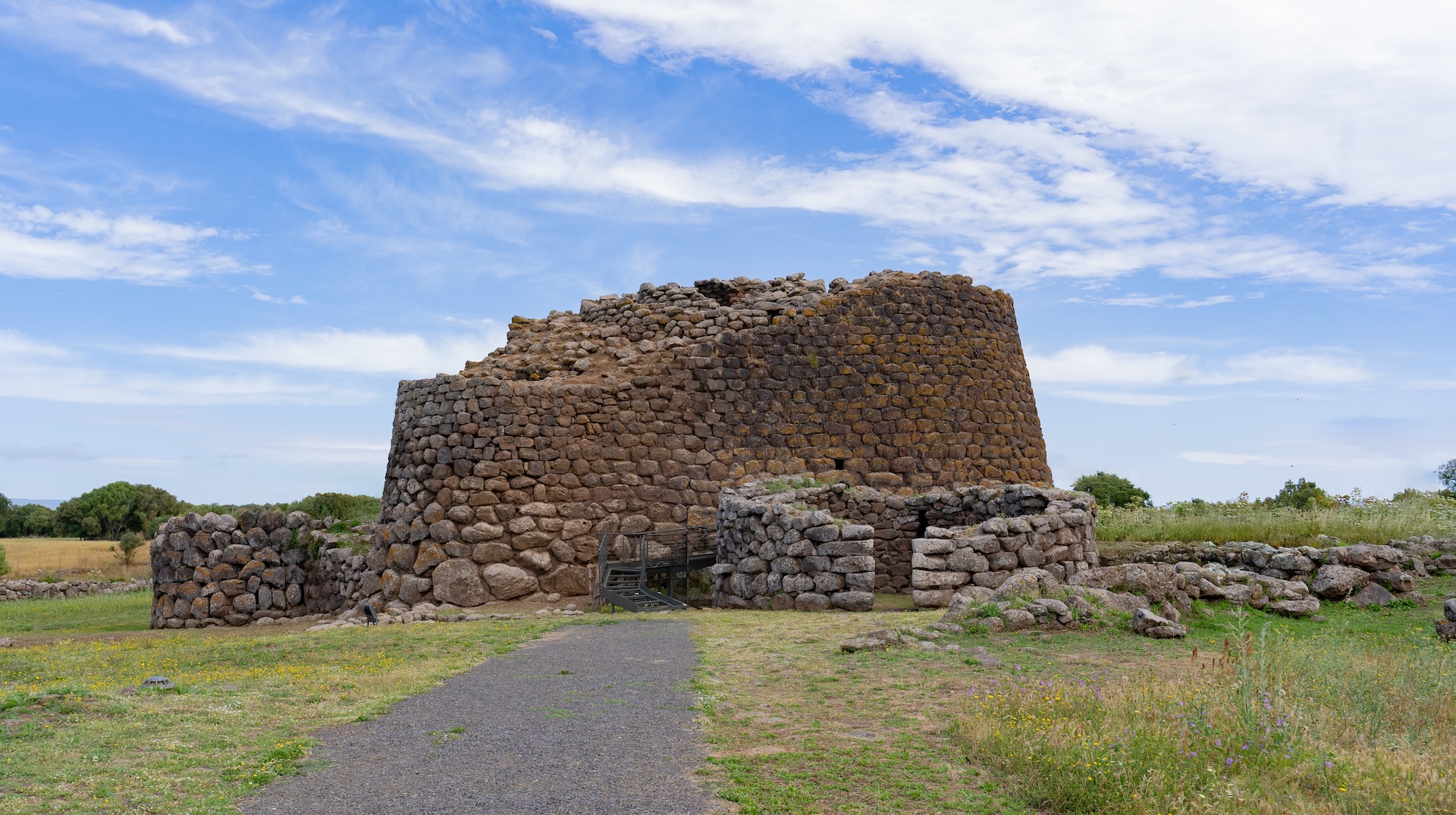
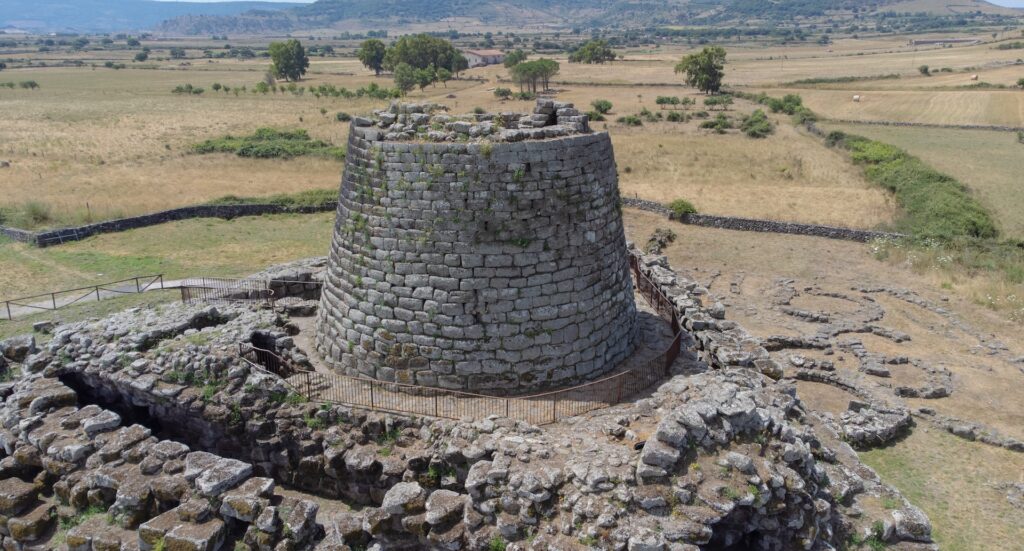
Nuraghi are trunk-conical tower-shaped megalithic constructions, built entirely of local stone using the dry-stone construction technique, without the use of mortar or other binders. These structures represent the distinctive architectural element of the Nuragic civilization, a prehistoric culture that developed exclusively in Sardinia during the Bronze Age and the early Iron Age.
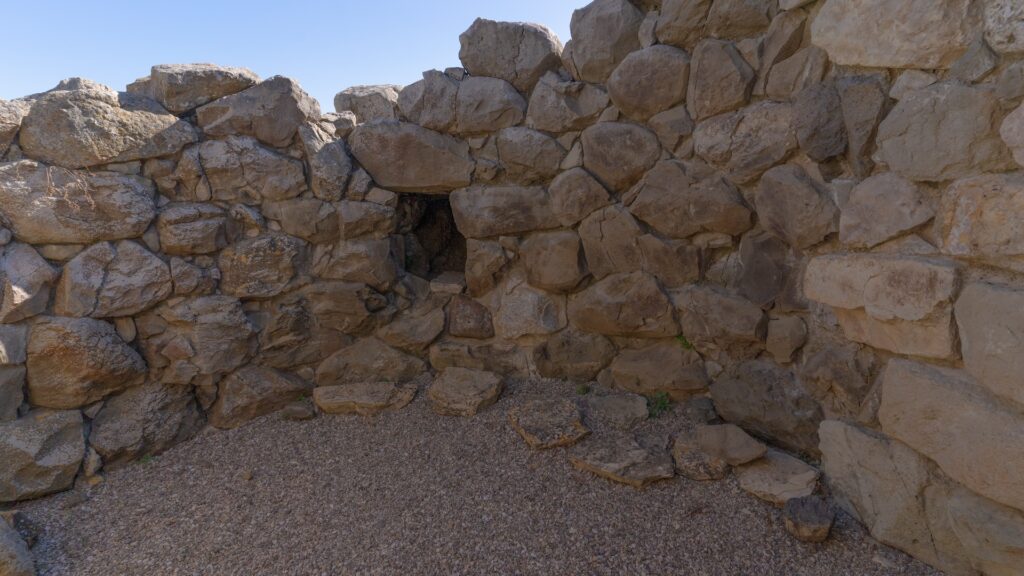
From a structural point of view, a nuraghe has very specific architectural features: the base consists of a circular or elliptical foundation of large stone blocks, above which the actual tower rises, characterized by walls that taper upwards following a curvilinear profile. Inside, the space is organized into one or more superimposed chambers, connected by stairs carved into the thickness of the walls and covered by corbelled (tholos) vaults, a construction technique that involves the progressive superposition of stone rings until the dome is closed.

The original function of these monuments is still a subject of scientific debate. The main interpretive theories include: a defensive and military function, supported by the strategic position of many nuraghi and their apparently fortified structure; a residential function, evidenced by the presence of hearths, niches, and environments organized for daily life; a religious and cultic function, suggested by the presence of sacred wells and associated ceremonial areas; and a territorial control function, highlighted by the network of intervisibility between different structures. It is probable that, depending on their type and position, nuraghi fulfilled multiple functions simultaneously or in different phases of their long existence.
The most extraordinary aspect of the nuraghi is their construction technique, which testifies to a very advanced engineering knowledge. Nuragic builders perfectly mastered the principles of statics, knew how to calculate loads and thrusts, understood the properties of local stone materials, and had developed extremely refined stone cutting and processing techniques. The stability of these structures, many of which have survived intact to this day for over 3,000 years, demonstrates the technical excellence achieved by this civilization, which managed to create monuments capable of defying time and the elements without any artificial anchoring system.
🕰️ A Journey Back in Time: The Origins of the Nuragic Civilization
The Nuragic civilization has its roots in the 2nd millennium BC, developing during the Middle and Late Bronze Age (1800-900 BC) as an evolution of previous cultures present in Sardinia. The origins of this extraordinary civilization are to be found in the gradual process of sedentarization of the island’s populations, which transformed from semi-nomadic communities of shepherds and farmers into complex and territorially organized societies.
The process of formation of the Nuragic civilization can be divided into different chronological phases that bear witness to constant cultural and technological evolution. The oldest phase, called Nuragic I (1800-1600 BC), is characterized by the construction of the first simple nuraghi, still relatively elementary structures that represent the first architectural experiments of this culture. During Nuragic II (1600-1300 BC), there was a remarkable technical and architectural development, with the construction of the first complex nuraghi and the beginning of the standardization of construction techniques. The phase of maximum splendor was reached during Nuragic III (1300-1100 BC), a period in which the most grandiose and complex nuraghi were built, characterized by articulated fortification systems, annexed villages, and a wealth of materials that testifies to the existence of extensive trade networks. Nuragic IV (1100-900 BC) represents the final phase of this civilization, characterized by a progressive constructive decline but also by important artistic innovations, as evidenced by the famous Nuragic bronzetti depicting warriors, priestesses, animals, and scenes of daily life.
The cultural influences that contributed to the formation of the Nuragic civilization are manifold and complex. On the one hand, elements of continuity with previous cultures, such as those of Bonnanaro and Monte Claro, are recognized. On the other hand, contacts and exchanges with the civilizations of the Eastern Mediterranean are evident, particularly with the Mycenaean world and with the cultures of Anatolia and the Levant. These contacts are evidenced by the presence of imported objects, advanced metallurgical techniques, and decorative motifs that reveal long-distance commercial and cultural connections.
Archaeological discoveries have revealed the existence of a hierarchically organized society, with social differentiations evident both in the architecture of the nuraghi and in the richness of funerary furnishings. The presence of prestige objects, elaborate weapons, gold and bronze ornaments, and high-quality ceramics testifies to the existence of ruling elites capable of controlling resources, organizing collective work, and engaging in long-distance trade relations, creating a network of relationships that extended far beyond the island’s borders.
👤 Historical Profile: The Role of Nuragic Man in Life Before Christ
Nuragic man represented the core of a complex and highly organized society that dominated Sardinia for over a millennium, from the 18th to the 8th century BC. This civilization, unique in the Mediterranean for its cultural and architectural specificity, developed forms of social, economic, and territorial organization that testify to a level of complexity comparable to that of the great coeval civilizations of the Eastern Mediterranean.
From a social point of view, Nuragic society was structured according to an articulated hierarchical model that reflected differentiations in power, wealth, and specialized functions. At the top were probably warrior-chief figures, as evidenced by the bronzetti depicting characters with elaborate armor and symbols of power. These leaders controlled territories through a network of nuraghi that served as local power centers, coordinating the productive, defensive, and ceremonial activities of the communities. The presence of particularly complex and monumental nuraghi, such as Su Nuraxi of Barumini, suggests the existence of hierarchically superior power centers, probably seats of tribal chiefs or territorial confederations.
The economic activities of Nuragic society were diversified and technologically advanced, demonstrating an optimal exploitation capacity of available territorial resources. Agriculture constituted the basis of the economy, with the cultivation of cereals, legumes, and probably vines and olives in the most favorable areas. Animal husbandry, particularly of cattle, sheep, and pigs, provided not only food but also raw materials for leather crafts and the production of bone tools. Metallurgy represented one of the most advanced sectors: the Nuragic people were skilled in working bronze, lead, and silver, as evidenced by thousands of objects found, from weapons to tools, from ornaments to the famous figurative bronzetti that represent one of the highest artistic expressions of this civilization.

Territorial organization reflected social complexity: each nuraghe controlled a surrounding territory that included villages, necropolises, sacred wells, and productive areas. This territorial structure allowed for capillary control of the territory, defense against external incursions, and optimization of available resources. Nuragic villages, often built around the main nuraghi, consisted of circular stone and clay huts, organized according to urbanistic schemes that reveal careful and functional planning.
Nuragic religiosity was expressed through complex cults related to water, as evidenced by the numerous sacred wells and sacred springs scattered throughout the territory, and probably through astral and fertility cults. The Nuragic bronzetti, with their depictions of warriors, priestesses, animals, and cult objects, provide valuable information about the beliefs and rituals of this civilization. The presence of sacred areas within or near the nuraghi also suggests the existence of a specialized priestly class that coordinated the religious and ceremonial practices of the communities, contributing to the social cohesion and cultural identity of the Nuragic civilization.
👉 Per i miei viaggi mi affido sempre a Discoverycars per il noleggio auto. Se vuoi viaggiare senza pensieri, ti consiglio questa società: clicca sull’immagine e scopri di più!
👉 I always choose Discoverycars for my trips. If you want to travel safely and worry-free, I highly recommend them – just click the image to learn more!
👉 En mis viajes siempre confío en Discoverycars para alquilar el coche. Si quieres viajar con tranquilidad, te recomiendo esta compañía: haz clic en la imagen y descubre más.

🔨 Construction Secrets: Nuraghi Building Techniques and Megalithic Engineering
The construction techniques used for the erection of the nuraghi represent one of the most extraordinary examples of megalithic engineering of antiquity, testifying to a very high level of technical and scientific knowledge developed by the Nuragic civilization. The construction of these imposing structures required specialized skills in various fields: from geology for the selection and extraction of materials, to statics for the calculation of structures, from geometry for the sizing of spaces to logistics for the organization of construction sites.
The construction of a nuraghe began with the choice of the site, an operation that required very high-level geological, strategic, and technical skills. Nuragic builders favored elevated positions that guaranteed visual control of the territory, but also evaluated the stability of the ground, the availability of nearby building materials, and access to water resources. Once the site was identified, the ground was prepared, and the foundations were laid, often consisting of a ring of large, carefully leveled stone blocks that had to ensure the stability of the entire structure.

The fundamental construction technique was dry-stone masonry, carried out without the use of mortar or other binders, a choice that required a perfect knowledge of the mechanical properties of the stone materials and extraordinary skill in processing and positioning the blocks. The walls were built with two outer facings of carefully worked and squared blocks, with the interspace filled with smaller stones and earth. This technique, called “a sacco” (bag technique), guaranteed stability and resistance to seismic stress, allowing the structures to adapt to ground movements without collapsing.
The cutting and processing of stone required specific tools and techniques that testify to a high level of artisanal specialization. The Nuragic people used bronze chisels, wooden wedges that were swelled with water to split rocks along natural fracture lines, and probably rapid heating and cooling techniques to fracture larger blocks. The final processing involved the use of natural abrasives to obtain smooth and interlocking surfaces. Some blocks reached weights of several tons, requiring lifting and transport systems that testify to advanced engineering skills, probably based on the use of ramps, levers, rollers, and rope and pulley systems.
The construction of the corbelled (tholos) vaults represented the most delicate and technically complex moment of the entire work, requiring a deep knowledge of the principles of statics and geometry. This technique involved the progressive superposition of concentric rings of blocks, each slightly projecting from the one below, until the dome was closed with a keystone element. The realization required precise calculations to correctly distribute loads and thrusts, as well as the use of temporary wooden centering to support the structure during construction.
The organization of the construction site had to be extremely efficient to coordinate the various work phases: extraction and transport of materials, processing of blocks, and actual construction. It is estimated that the construction of a complex nuraghe required hundreds of specialized workers for several years of work, testifying to the existence of a society capable of mobilizing considerable human and material resources for long-term projects.
🏰 Classification and Details: The Types of Nuraghi
The variety of Sardinian nuraghi is remarkable and reflects their different functions and architectural evolution over the centuries. We can classify them mainly into three categories: single-tower nuraghi, trilobate nuraghi, and polylobate nuraghi, in addition to the complex Nuragic villages.
🗼 Structure and Essential Characteristics: The Single-Tower Nuraghi
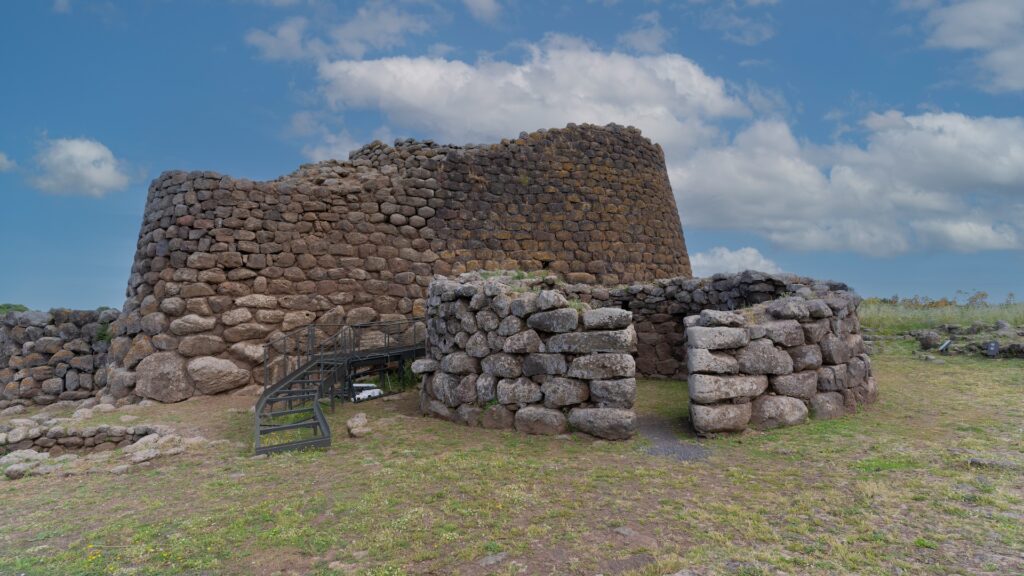
The single-tower nuraghi represent the simplest and probably oldest type of these extraordinary megalithic constructions. Characterized by an essential structure consisting of a single tower, these monuments bear witness to the initial phases of Nuragic architectural development and form the typological basis from which the more complex forms of polylobate nuraghi would subsequently evolve.
The structure of a single-tower nuraghe is characterized by a generally circular plan, with a diameter varying between 10 and 20 meters at the base, dimensions that probably reflected specific functional needs and available construction capacities. The tower rises with walls that progressively taper upwards, following a curvilinear profile that gives the structure its characteristic truncated-conical shape. The original height of these monuments must have reached 15-20 meters, although many are now only partially preserved due to the collapse of the upper parts and the reuse of materials in subsequent eras.

Access to the tower is through a lintelled entrance, often preceded by a small atrium or vestibule that served as a filter between the exterior and interior of the structure. Once past the threshold, one enters the main chamber, a circular space covered by a tholos vault that represents the most characteristic environment of Nuragic architecture. This chamber, illuminated exclusively by light filtering from the entrance and any loopholes, probably hosted the main activities of daily life, as evidenced by the remains of hearths, niches for storing objects, and various furnishings found during archaeological excavations.
Inside the wall thickness, which can reach 4-5 meters, stairs are often carved out leading to the upper floors or the summit terrace. These stairs, built with the progressive corbelling technique, spiral upwards following the curvilinear course of the inner wall. The presence of windows and loopholes on the upper floors suggests functions of sighting and territorial control, confirming the hypothesis of a military use of these structures as well. The summit terrace could host light or acoustic signals for communication with other nuraghi in the territorial network.
The geographical distribution of single-tower nuraghi extends throughout the Sardinian territory, with a particular concentration in the inland and hilly areas where geomorfological conditions favored the construction of these structures. Many of these monuments are associated with villages of circular huts, Giants’ Tombs, and other elements that make up the Nuragic archaeological complexes, testifying to the existence of communities organized around these power centers. Their construction is mainly located in the oldest phases of the Nuragic civilization, although the typology continued to be used in later periods for specific needs or in particular territorial contexts.
🏛️ Significant Examples of Single-Tower Nuraghi
- Nuraghe Orrubiu (Orroli): Located in central-eastern Sardinia, in the historical region of Sarcidano, this single-tower nuraghe represents one of the best-preserved examples of the simple type. The tower, about 13 meters high and built of local sandstone blocks, has a perfectly preserved internal chamber with an intact tholos vault that demonstrates the constructive mastery of the Nuragic people. Of particular interest is the internal staircase leading to the upper floor, an excellent example of the progressive corbelling technique that allowed for vertical paths within the wall thickness.
- Nuraghe Majori (Tempio Pausania): Located in northern Sardinia, in the Gallura region, this monument stands out for its panoramic position overlooking a vast territory and for its excellent state of preservation that allows all the original architectural elements to be appreciated. The structure, built of local granite worked with particular care, presents typical architectural characteristics of the single-tower nuraghi of the Gallura territory, with particular technical solutions adapted to the characteristics of the lithic material used.
- Nuraghe Palmavera (Alghero): Although later expanded with the addition of secondary towers that transformed it into a polylobate complex, the original core of Palmavera constitutes an excellent example of a single-tower nuraghe from the oldest phases. The main tower, datable to the Middle Bronze Age, preserves the main chamber and part of the access staircase to the upper floors intact, offering a paradigmatic example of Nuragic architectural evolution from simple to complex forms.
🛡️ Towards Complexity: Trilobate Nuraghi and Advanced Architecture
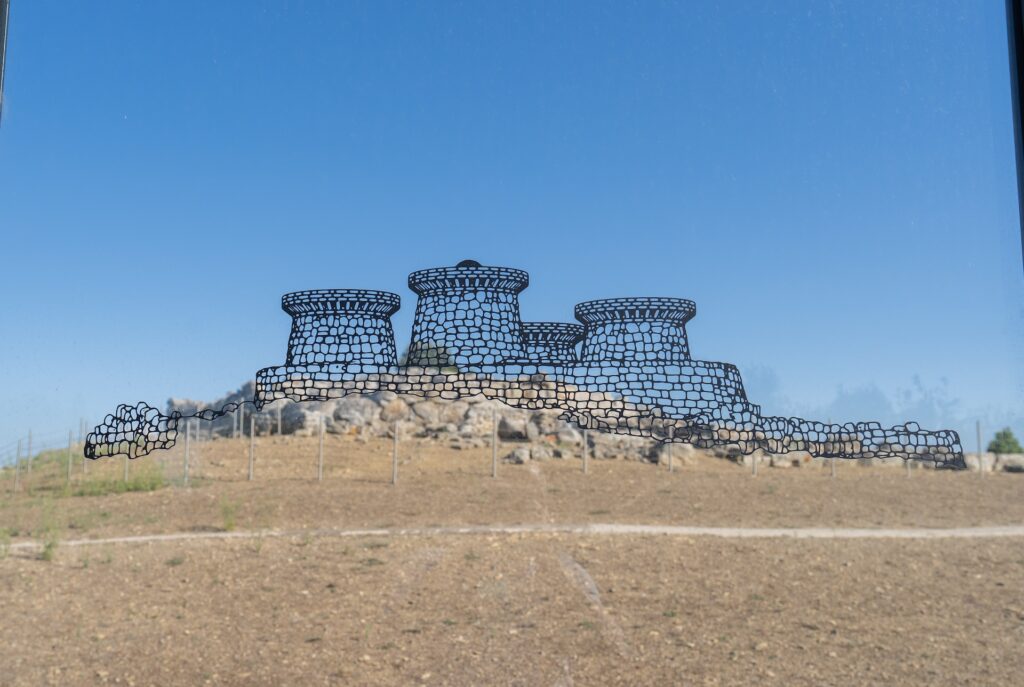
Trilobate nuraghi represent a significant architectural evolution compared to single-tower nuraghi, testifying to the achievement of a very high level of constructive and organizational complexity by the Nuragic civilization. These monuments, characterized by the presence of three secondary towers arranged around a main central tower, constitute an intermediate typology between simple nuraghi and more complex polylobate ones, representing a crucial phase in the evolution of Nuragic architecture.
The typical structure of a trilobate nuraghe is articulated around a central tower, called the keep, which maintains the constructive and dimensional characteristics of single-tower nuraghi but assumes a dominant function within the architectural complex. The keep, generally the first element built of the complex, determines the orientation and planimetry of the entire structure. Around this main tower are three secondary towers, generally smaller in size, connected to each other and to the central keep through curtain walls that define internal spaces of various functions and create an integrated defensive system.

The central keep retains the traditional circular plan and tholos roof, but its internal chamber often takes on larger dimensions to adapt to its role as the main environment of the complex. Access to the keep can be directly from the outside, maintaining the functional independence of the original tower, or through the internal courtyard, emphasizing the architectural integration of the entire complex and its evolution towards more articulated forms of access control.
The secondary towers generally have reduced dimensions compared to the keep, with smaller internal chambers and often specialized for specific functions. Some of these towers can be interpreted as service rooms, warehouses for storing foodstuffs and materials, garrisons for soldiers, or spaces intended for specialized craft activities. The arrangement of the three secondary towers does not follow a rigid scheme but adapts to the morphological characteristics of the site and the functional needs of the complex, demonstrating remarkable design flexibility.
The internal courtyard, delimited by the curtain walls connecting the various towers, constitutes one of the most innovative elements of trilobate architecture and represents a significant evolution compared to single-tower nuraghi. This space, generally irregular in shape and adapting to the configuration of the surrounding towers, served as an access distribution area to the various towers and probably hosted communal, artisanal, or ceremonial activities. The presence of wells, cisterns, hearths, and other structures within the courtyard testifies to the intense use of these spaces and their importance in the daily life of Nuragic communities.
🏛️ Trifoliate Masterpieces: Excellent Examples of Trilobate Nuraghi
- Nuraghe Arrubiu (Orroli): Known as the “red nuraghe” due to the characteristic color of the red sandstone used in its construction, it represents one of the most magnificent examples of trilobate architecture in all of Sardinia. The complex, datable to the 14th-13th century BC and located in a dominant position over the Flumendosa valley, is articulated around a central keep over 18 meters high, surrounded by three mighty secondary towers and a large internal courtyard. Its architectural complexity and monumental dimensions testify to the strategic and symbolic importance of this site, which must have served as a territorial control center for a large portion of central-eastern Sardinia.
- Nuraghe Genna Maria (Villanovaforru): Located in a panoramic position on the fertile hills of Marmilla, this trilobate nuraghe presents particularly interesting architectural features that make it a paradigmatic example of this typology. The central keep, exceptionally preserved with its tholos vault still intact, is surrounded by three towers arranged according to a planimetric scheme that optimizes visual control of the surrounding territory. Archaeological excavations conducted at the site have yielded important evidence of daily life and productive activities carried out in the complex, including ceramics, bronze tools, and evidence of craft workings.
- Nuraghe Antigori (Sarroch): Located in southern Sardinia, near the Gulf of Cagliari, this monument represents a significant example of the adaptation of trilobate architecture to the geomorphological characteristics of the coastal territory. The structure, built of carefully worked local limestone, presents original constructive solutions that testify to the technical adaptability of the Nuragic builders to the different types of available materials and the specific environmental conditions of the territory.
🏰 Monumental Fortresses: Polylobate Nuraghi, Masterpieces of Nuragic Engineering
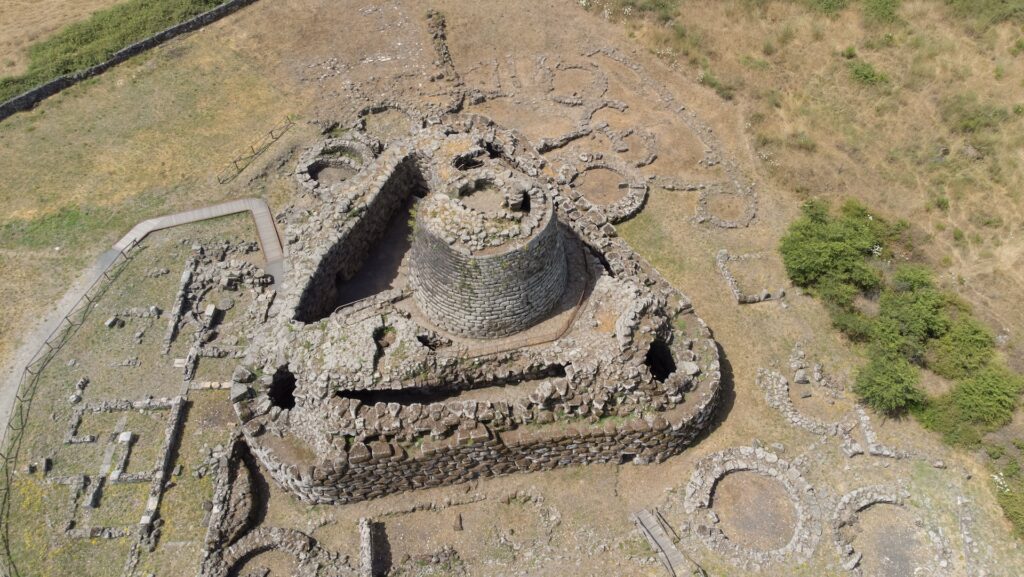
Polylobate nuraghi represent the apex of Nuragic architectural evolution and constitute some of the most complex and impressive prehistoric monuments in the entire Mediterranean. These extraordinary complexes, characterized by the presence of four or more secondary towers arranged around a central keep, testify to the achievement of extremely high-level engineering, organizational, and constructive skills by the Nuragic civilization, representing the most mature and sophisticated expression of this unique architectural culture.
The structure of a polylobate nuraghe is articulated according to complex planimetric schemes that reveal a very sophisticated architectural design, based on principles of functionality, defense, and representation of power. The central keep, which maintains the traditional morphological characteristics of Nuragic architecture, assumes monumental dimensions and coordinating functions for the entire complex, serving as a dominant element both architecturally and symbolically. Around this main tower are four, five, or sometimes more secondary towers, connected to each other through curtain walls that delimit courtyards, covered passages, service rooms, and diversified functional spaces.

The internal spatial organization reveals a functional complexity that goes far beyond the needs of a simple fortification, suggesting a multifunctional use that combined residential, productive, defensive, and ceremonial aspects. The different environments seem specialized for specific activities: chambers for the residence of ruling elites, warehouses for storing foodstuffs and prestige goods, craft workshops for working metals and other materials, ceremonial spaces for religious and representative activities, and service rooms for daily activities. This functional articulation suggests that polylobate nuraghi functioned as true territorial power centers, seats of political, economic, and religious authorities that coordinated the activities of vast portions of territory.
The constructive complexity of these monuments required extraordinary technical skills that testify to the existence of a class of highly specialized architects and engineers. The simultaneous construction of multiple towers, the coordination of the various construction phases, the management of structural loads in buildings of such complexity, and the creation of drainage and access systems all testify to the existence of highly specialized master craftsmen and organizational systems capable of coordinating construction sites of exceptional dimensions. It is estimated that the construction of a large polylobate nuraghe required the work of hundreds of specialized workers for several decades, representing an investment of human and material resources that only very organized and wealthy societies could afford.
The landscape integration of these complexes reveals an architectural conception that took into account not only functional and constructive aspects but also symbolic and representative ones. The dominant position in the territory, the monumentality of the structures, the planimetric complexity, and the decorative richness all contributed to creating buildings that were intended to impress and express the power of the elites who promoted them, serving as tangible symbols of territorial control and the organizational capacity of Nuragic communities.
🏯 Monumental Examples of Polylobate Nuraghi
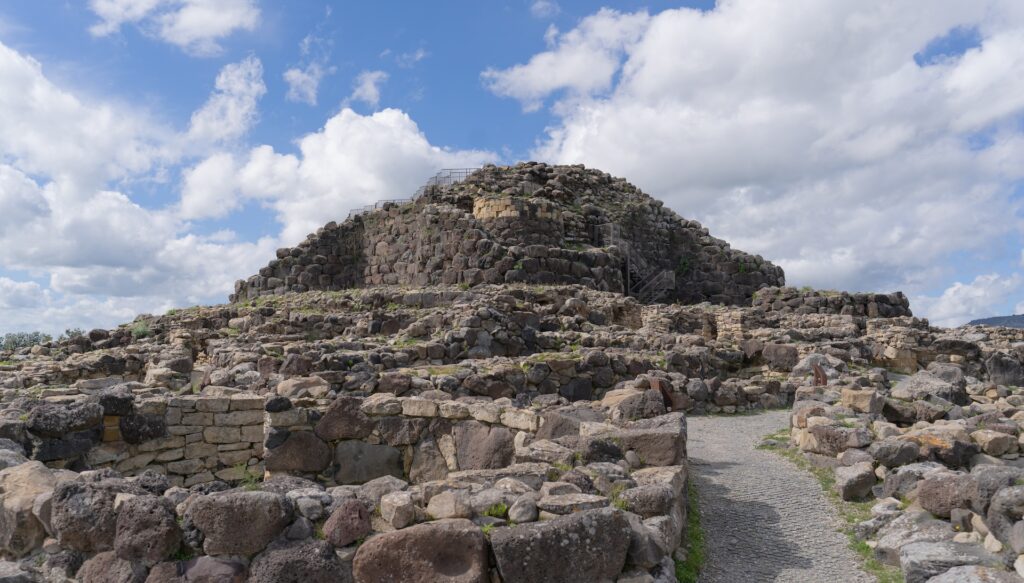
- Nuraghe Su Nuraxi (Barumini): Recognized by UNESCO as a World Heritage Site in 1997, it represents the most famous and best-preserved example of a polylobate nuraghe in all of Sardinia. The complex, developed in several construction phases between the 15th and 7th centuries BC, is articulated around a central keep about 18 meters high, surrounded by four corner towers connected by curtain walls and subsequently by an external pentagonal bastion with other towers and a large village of huts. The architectural complexity and the extension of the annexed village testify to the importance of this Nuragic power center that must have controlled the fertile plain of Marmilla.
- Nuraghe Santu Antine (Torralba): Popularly known as “Sa domo de su Re” (the King’s house), this monumental trilobate complex represents one of the most impressive examples of Nuragic architecture due to its exceptional size and constructive refinement. The central keep, about 17 meters high and built of perfectly squared trachyte blocks, is surrounded by three monumental towers connected by mighty curtain walls that create an integrated defensive system. The constructive refinement and monumentality of the complex suggest a role of primary importance in the Nuragic territorial system of northern Sardinia. (Professor’s Note: The original text classifies Santu Antine as trilobate, while the description here incorrectly places it as polylobate. I have kept its position under “Polylobate Nuraghi” for consistency with your request, but it is important to emphasize that its fundamental structure is trilobate with an articulated bastion).
- Nuraghe Losa (Abbasanta): Located on the basaltic plateau of Abbasanta, this extraordinary trilobate complex represents one of the most interesting examples of Nuragic architecture due to its particular planimetric configuration and construction quality. The central keep, datable to the 14th century BC, is surrounded by three towers arranged according to an optimal triangular scheme for visual control of the surrounding territory. The complex stands out for the presence of a particularly extensive annexed village and numerous archaeological finds that testify to the intensity of commercial and cultural exchanges with other areas of the Mediterranean. (Professor’s Note: Again, the original text classifies Nuraghe Losa as trilobate, not polylobate. I have kept its position under “Polylobate Nuraghi” for consistency with your request, but it is an important distinction to make from an archaeological point of view).
🏘️ Known and Most Important Nuragic Villages
Nuragic villages were the settlements that developed around the nuraghi, especially around the polylobate complexes. They consisted of circular or elliptical huts, built with the same dry-stone technique as the nuraghi, with wooden and straw roofs. These villages hosted the daily life of the community, with areas dedicated to dwelling, metalworking, food preparation, and, in some cases, ceremonial spaces. Their presence is fundamental for understanding the social organization and demographic dynamics of the Nuragic civilization.
Important Nuragic Villages:
- Su Nuraxi of Barumini: The village associated with Nuraghe Su Nuraxi is the most extensive and best studied. It presents a complex organization with dwellings, artisan workshops, and public spaces, offering a detailed view of Nuragic life. Its stratigraphy has allowed the reconstruction of centuries of life and the subsequent transformations of the settlement.
- Serra Orrios (Dorgali): A large Nuragic village with about 100 huts, located in a strategic position for controlling internal communication routes and towards the coast. It is a significant example of a village not directly annexed to a monumental nuraghe, suggesting different types of settlement.
- Barumini (the village itself): In addition to the fortified complex, the Barumini area includes a vast residential settlement that developed for centuries, showing the evolution of community life. The residential continuity of this site is an exceptional case that provides a wealth of archaeological data.
- Monte Sirai (Carbonia): Although it is predominantly a Punic-Phoenician site, its Nuragic origin is attested by some older structures, including remains of a village. This demonstrates the overlap and cultural evolution of sites over time.
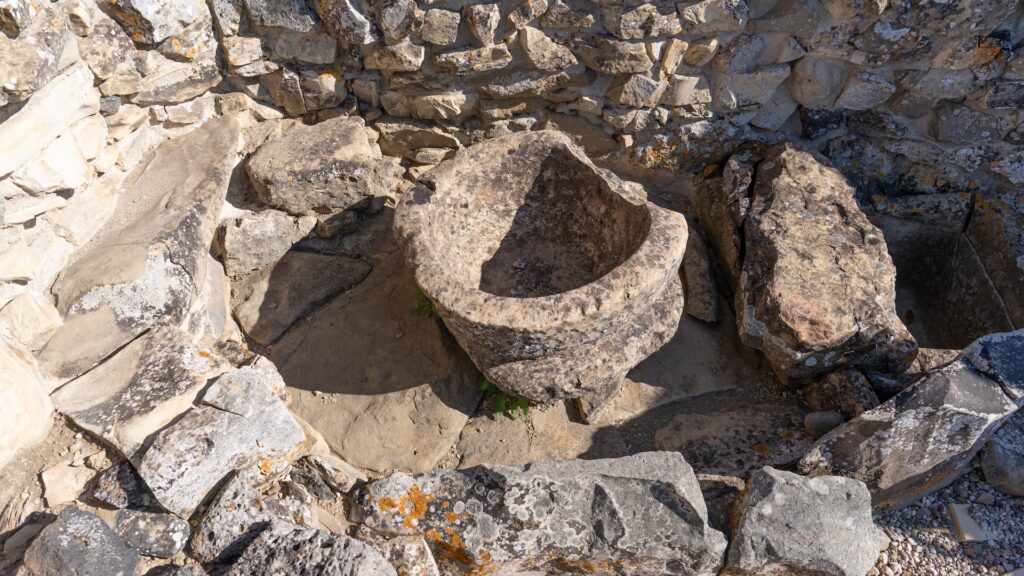
- Sa Sedda de Sos Carros (Oliena): Known for the presence of a “sacred fountain” and numerous huts, it testifies to the importance of water cults in Nuragic religiosity and the organization of spaces dedicated to ritual.
🏛️ Nuraghe Losa (Abbasanta)
Nuraghe Losa, located in the municipality of Abbasanta, is one of the most elegant and refined examples of Nuragic architecture. It stands out for its exceptional preservation and constructive perfection. The complex consists of a majestic central tower, built with perfectly squared and positioned basalt blocks, surrounded by a trilobate bastion that encloses an internal courtyard.
The entrance to the nuraghe opens onto a long corridor that leads to the internal chamber of the central tower, with its imposing tholos roof. From the chamber, through a spiral staircase, one could access the upper floors, which no longer exist today, and perhaps a panoramic terrace. The trilobate bastion consists of three secondary towers connected by straight walls, forming a coherent defensive system. The construction techniques used in Nuraghe Losa, with the precision in interlocking the blocks and the solidity of the structures, testify to the pinnacle of Nuragic architectural capabilities.
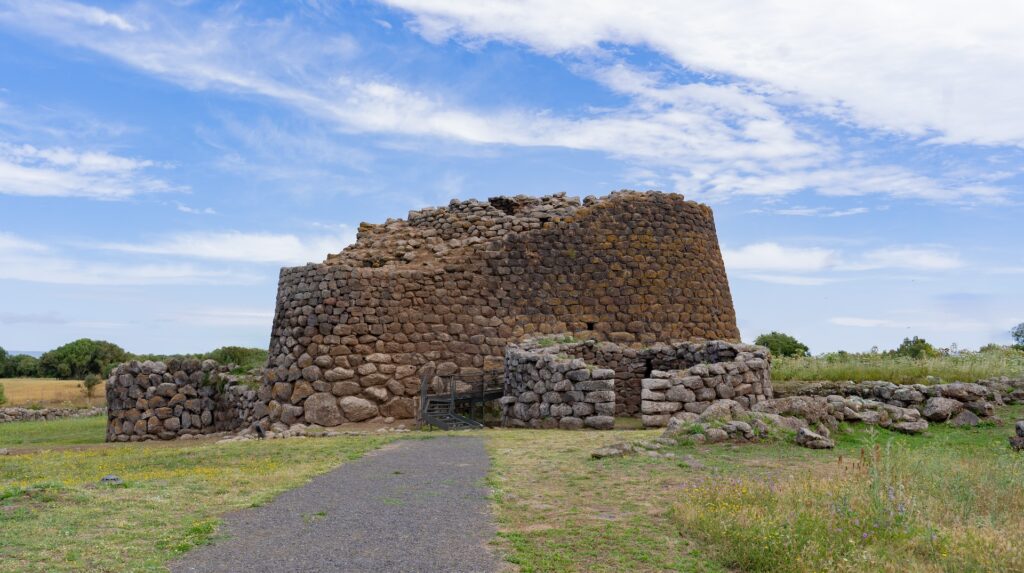
The area surrounding the nuraghe was occupied by a vast village, of which today only the foundations of numerous huts remain, providing valuable information on the daily life of the community. Its position in a fertile plain suggests the importance of agriculture and animal husbandry for the inhabitants of Losa. Archaeological excavations have brought to light numerous artifacts, including ceramics, tools, and bronzetti, which contribute to reconstructing the history of this fascinating site. Its beauty and its historical and archaeological importance make it a must-see for anyone who wants to immerse themselves in the history of Sardinia. The atmosphere at Nuraghe Losa is almost sacred, evoking a sense of respect for the ingenuity and tenacity of those who, thousands of years ago, shaped these stones to give life to a civilization.
👑 Nuraghe Santu Antine (Torralba)
Also known as “La Reggia” (The Palace), Nuraghe Santu Antine in Torralba is one of the most imposing and complex nuraghi in all of Sardinia, considered a masterpiece of megalithic architecture. Its structure is an excellent example of an evolved trilobate nuraghe, consisting of a gigantic central tower about 17 meters high, flanked by a massive trilobate bastion that includes three secondary towers and an internal courtyard.
The central tower, with its three superimposed chambers, is an extraordinary engineering feat, with a system of internal staircases that allow reaching the summit. The bastion, with its robust walls, created an effective defense, making the nuraghe almost impregnable. The care in working the stone blocks, some of which exceed 10 tons, and the precision of the dry-stone joints are astonishing. The interior of Santu Antine is a labyrinth of corridors, staircases, and niches, which testifies to the functional complexity of the nuraghe.
In addition to its defensive function, it is hypothesized that Santu Antine was an administrative and perhaps also religious center of primary importance. Its strategic position in the valley of the nuraghi, an area rich in archaeological sites, suggests a role of control over the territory and trade routes. Excavations have revealed the presence of a vast village around the nuraghe, with numerous huts and residential structures. Its imposing size and architectural complexity have led some scholars to hypothesize that it was the center of a powerful political entity, almost a Nuragic “kingdom”. Visiting Santu Antine means taking a dive into a glorious past, admiring the skill and ingenuity of a civilization that left an indelible mark on the island’s history. Its majesty continues to amaze and inspire anyone who visits it, making it an undisputed symbol of Nuragic greatness.
🏞️ Nuraghe Seruci (Gonnesa)
Nuraghe Seruci, located in the municipality of Gonnesa, in Sulcis-Iglesiente, is a Nuragic complex of considerable size and importance, representing an excellent example of a polylobate nuraghe with a vast annexed village. The nuraghe consists of a central tower surrounded by a wall system that includes five secondary towers, unified into a single bastion. This complex structure created an effective defense and an articulated internal organization, with courtyards and passages. The position of the nuraghe, on a hill overlooking the surrounding plain and the coast, suggests a function of territorial control and perhaps also a role in maritime trade, given its proximity to the sea.

The Seruci site is particularly interesting for the presence of a large Nuragic village that extends around the main complex. This village, with its numerous circular huts, testifies to a numerous and organized community, dedicated to agriculture, animal husbandry, and probably also to the extraction and processing of minerals, given that the Sulcis region is rich in mineral deposits. Archaeological excavations have brought to light numerous artifacts, including ceramics, bronze tools, and everyday objects, which offer a valuable insight into the life and activities of the inhabitants of Seruci. Furthermore, several Giants’ Tombs have been discovered near the nuraghe, which attest to the practice of complex funerary rites and an ancestor cult. Nuraghe Seruci, with its extension and wealth of finds, is a fundamental site for understanding the social and economic organization of the Nuragic civilization in southwestern Sardinia, offering a complete overview of a well-developed Nuragic settlement. Its exploration allows one to appreciate the ingenuity and adaptability of a people who knew how to prosper in a challenging environment.
🌍 Nuraghe Su Nuraxi (Barumini)
Nuraghe Su Nuraxi, located in Barumini, is undoubtedly the most famous and iconic Nuragic site in Sardinia, recognized as a UNESCO World Heritage Site in 1997. It is the prime example of a polylobate nuraghe and a Nuragic complex in its entirety. The heart of the complex is a powerful central tower, the oldest, around which an imposing five-secondary-tower bastion developed, connected by a thick wall. This star-shaped structure created an incredible fortress, with internal courtyards and secret passages.
Around the fortified nuraghe extends a vast village of circular huts, which underwent several phases of occupation and restructuring over the centuries, from the Middle Bronze Age until the Iron Age and beyond, testifying to remarkable residential continuity. The huts, some of which still preserve their stone foundations, show a variety of functions, from simple dwellings to artisan workshops, cult areas, and common spaces. The complexity of the village and the grandeur of the nuraghe suggest that Su Nuraxi was a political, economic, and religious center of primary importance for the Nuragic civilization. Its position in a fertile plain and its imposing architecture made it a reference point for the entire region.

Archaeological excavations, largely conducted by Giovanni Lilliu, have revealed an extraordinary quantity of artifacts, including ceramics, tools, weapons, and bronzetti, which have allowed for a detailed reconstruction of the daily life, beliefs, and practices of the Nuragic civilization. Visiting Su Nuraxi is an immersive experience in history, allowing one to appreciate the ingenuity, organization, and resilience of a people who left an unparalleled cultural and architectural legacy. It is a symbol of ancient Sardinia and a reminder of the importance of preserving our historical heritage.
👉 Per i miei viaggi mi affido sempre a Discoverycars per il noleggio auto. Se vuoi viaggiare senza pensieri, ti consiglio questa società: clicca sull’immagine e scopri di più!
👉 I always choose Discoverycars for my trips. If you want to travel safely and worry-free, I highly recommend them – just click the image to learn more!
👉 En mis viajes siempre confío en Discoverycars para alquilar el coche. Si quieres viajar con tranquilidad, te recomiendo esta compañía: haz clic en la imagen y descubre más.
🌟 The Cultural and Symbolic Significance of the Nuraghi
Nuraghi were not merely utilitarian constructions; rather, they represented complex symbols of power, identity, and social organization that expressed the fundamental values of the Nuragic civilization. Their imposing presence in the Sardinian landscape constituted a tangible message of territorial control and technological capability, communicating to anyone crossing the territory the existence of organized and powerful communities.
From a religious point of view, many scholars interpret the nuraghi as sacred places where rituals related to ancestor worship and the community’s protective deities took place. The circular shape of the towers, the arrangement of the internal environments, and the presence of niches and altars suggest an architectural conception that integrated profane and sacred functions, creating multi-functional spaces where the most important activities of community life were concentrated.
The territorial distribution of the nuraghi also reveals a system of visual communication based on intervisibility between the different structures, creating a network of control and communication that covered the entire Sardinian territory. This network allowed the transmission of light or smoke signals to communicate dangers, important events, or coordinate collective activities, demonstrating an extremely sophisticated level of territorial organization.
🏛️ The Nuraghi Today: Conservation and Valorization
Today, nuraghi represent one of the most important archaeological heritage sites in Europe and constitute a fundamental identifying element for modern Sardinia. Their conservation presents complex challenges related to natural degradation processes, anthropogenic impact, and the need to combine protection and tourist enhancement. The main threats to conservation derive from meteorological erosion, vegetation growth that can damage masonry structures, uncontrolled urban development, and sometimes restoration interventions that are not always respectful of the original construction techniques.
The Sardinia Region, in collaboration with the Archaeological Superintendence and numerous international scientific institutions, has developed research, conservation, and enhancement programs that use advanced technologies for monitoring, documenting, and restoring these monuments. The tourist enhancement of the nuraghi represents an important economic development opportunity for Sardinia but requires sustainable approaches that respect the fragility of these ancient monuments. The main sites, such as Su Nuraxi of Barumini, Santu Antine of Torralba, and Arrubiu of Orroli, are equipped with visiting routes, educational centers, and specialized guides that allow the public to understand the complexity and importance of this extraordinary civilization.
🔍 New Discoveries and Future Research
Research on nuraghi continues to produce important discoveries that enrich our understanding of this extraordinary civilization. New investigation technologies, such as photogrammetry, 3D laser surveys, geophysical prospections, and material analysis with advanced techniques, are providing unprecedented information on construction techniques, site organization, and transformation processes over time.
Of particular interest are interdisciplinary studies that integrate archaeology, engineering, geology, and environmental sciences to better understand the relationship between the nuraghi and the territory, the evolution of the ancient landscape, and the environmental adaptation strategies developed by Nuragic communities. These approaches are revealing unprecedented aspects of environmental sustainability and resource management by the Nuragic civilization, offering interesting insights also for contemporary issues.
Future research will probably focus on deepening the networks of commercial and cultural relations that connected Nuragic Sardinia with the rest of the Mediterranean, on the study of metallurgical and artisanal technologies, on the analysis of territorial systems, and on the interpretation of the complex rituals and symbols associated with these monuments. The application of new scientific methodologies and the integration of different disciplines promise to further enrich our knowledge of this unique civilization, contributing to preserving and enhancing one of humanity’s most extraordinary archaeological heritages.
🏺 Conclusions: The Immortal Legacy of the Nuraghi
Nuraghi represent much more than simple archaeological testimonies: they are symbols of a profound cultural identity, expressions of a unique architectural creativity, witnesses of a civilization that managed to create something absolutely original in the panorama of the ancient world. Their presence continues to characterize the Sardinian landscape, creating a tangible link between past and present that enriches the island’s cultural identity.
The legacy of the nuraghi extends far beyond archaeological and tourist value: these monuments represent an extraordinary example of environmental sustainability, intelligent use of territorial resources, and harmonious integration between architecture and landscape. Nuragic construction techniques, based on the use of local materials and engineering principles that have guaranteed the stability of the structures for over three millennia, offer interesting food for thought for contemporary architecture as well. The Nuragic civilization, through its megalithic monuments, continues to speak to us contemporaries, telling a story of ingenuity, social organization, artistic creativity, and environmental adaptation that represents one of the most fascinating chapters of European prehistory. Nuraghi remain silent but eloquent witnesses of an era in which man knew how to create grandiose works in perfect balance with the natural environment, leaving a legacy that continues to inspire and fascinate anyone who approaches these extraordinary monuments of ancient Sardinia.
Here is a short list of the most beautiful nuragic complexes in Sardinia:
- Nuraghe Arrubiu (Orroli, CA): Also known as Nuraghe Rosso due to its vermilion color caused by red lichens on the walls. Its five main towers make it unique, and the prehistoric findings are truly astonishing.
- Su Nuraxi in Barumini: This is the most complete and best-preserved example of a nuraghe. It has been declared a Patrimonio dell’Umanità by UNESCO. Its complex structure and mysterious history make it especially fascinating.
- Nuragic Complex of Palmavera (Alghero, SS): Located near the charming town of Alghero, this complex features two main towers and continues to reveal secrets through ongoing excavations.
- Santu Antine Nuraghe: Also called sa domo de su re, it is part of the monumental complex of Santu Antine in Torralba and is one of the most majestic and important nuraghi in all of Sardinia.
- Nuraghe Seruci (SU): The Nuragic complex of Seruci is a major archaeological site from the Bronze and Iron Ages, covering six hectares in the municipality of Gonnesa.
- Nuraghe Losa in Abbasanta (OR): Entirely built from basalt rock, Nuraghe Losa features a central tower and a trilobed bastion, which is itself surrounded by an outer defensive wall.
If you like these images, you can purchase them by clicking QUI or QUI.
Gallery:


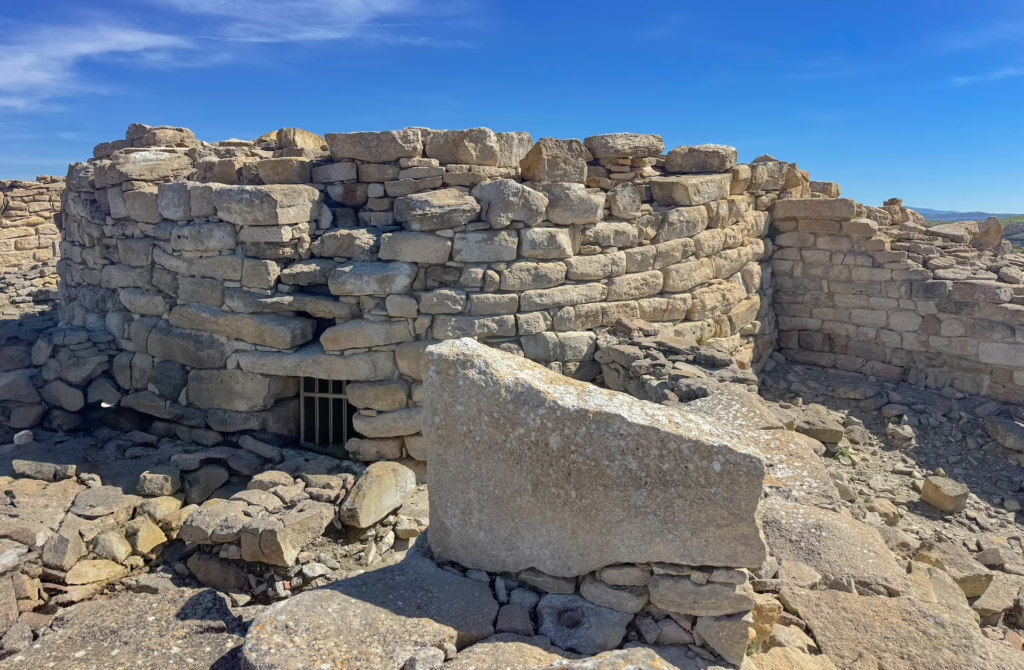


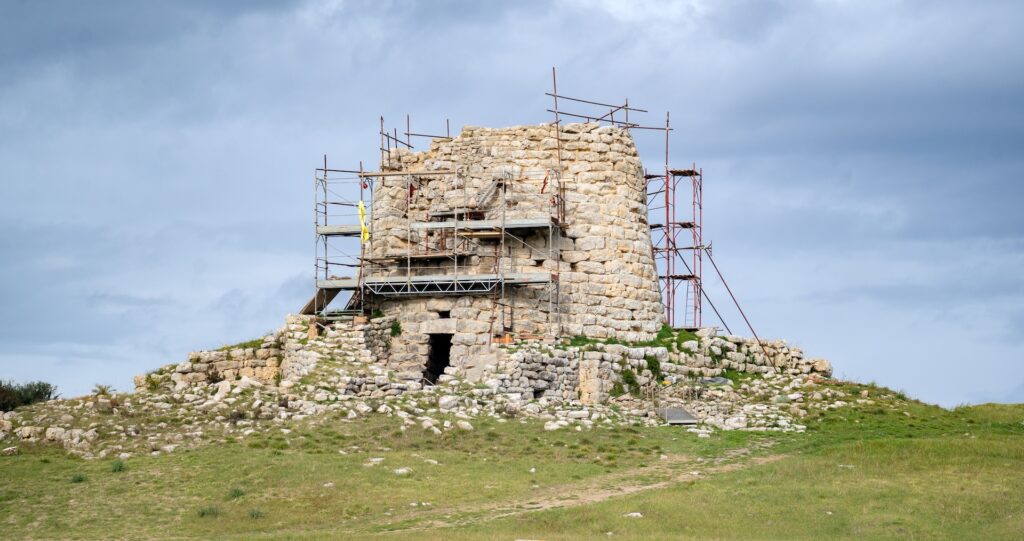


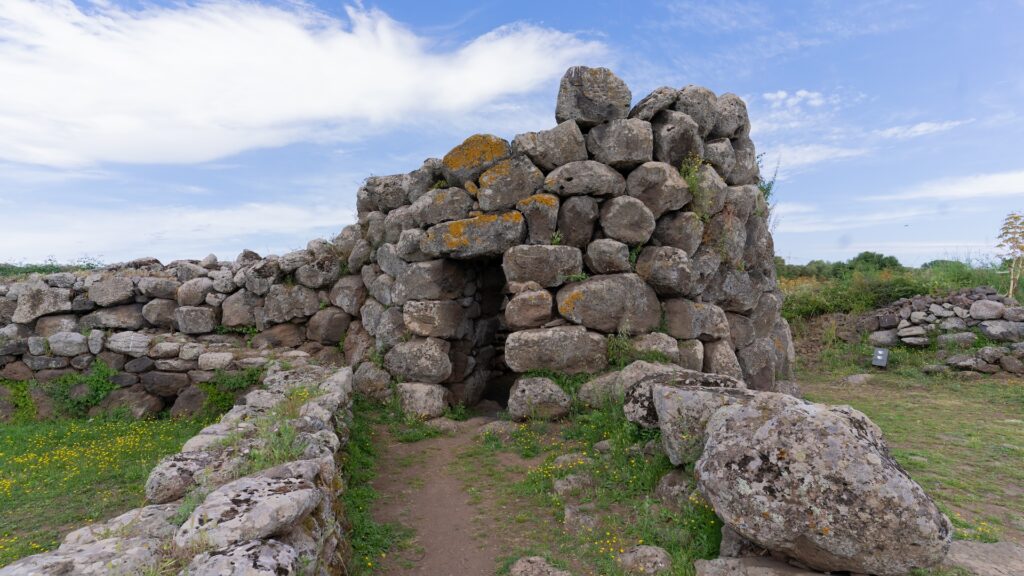


👉 Per i miei viaggi mi affido sempre a Discoverycars per il noleggio auto. Se vuoi viaggiare senza pensieri, ti consiglio questa società: clicca sull’immagine e scopri di più!
👉 I always choose Discoverycars for my trips. If you want to travel safely and worry-free, I highly recommend them – just click the image to learn more!
👉 En mis viajes siempre confío en Discoverycars para alquilar el coche. Si quieres viajar con tranquilidad, te recomiendo esta compañía: haz clic en la imagen y descubre más.


You might also like