
🗿 Introduction to Sardinian Menhirs – The Perdas Fittas
Sardinia houses one of Europe’s richest megalithic heritages, with over 100 menhirs scattered throughout the island territory. These stone monuments, called “perdas fittas” (planted stones) in Sardinian, represent one of humanity’s oldest artistic and religious manifestations. Erected between 3400 and 2500 BC during the Ozieri culture, Sardinian menhirs testify to an evolved Neolithic civilization that preceded the famous Nuragic civilization by millennia.
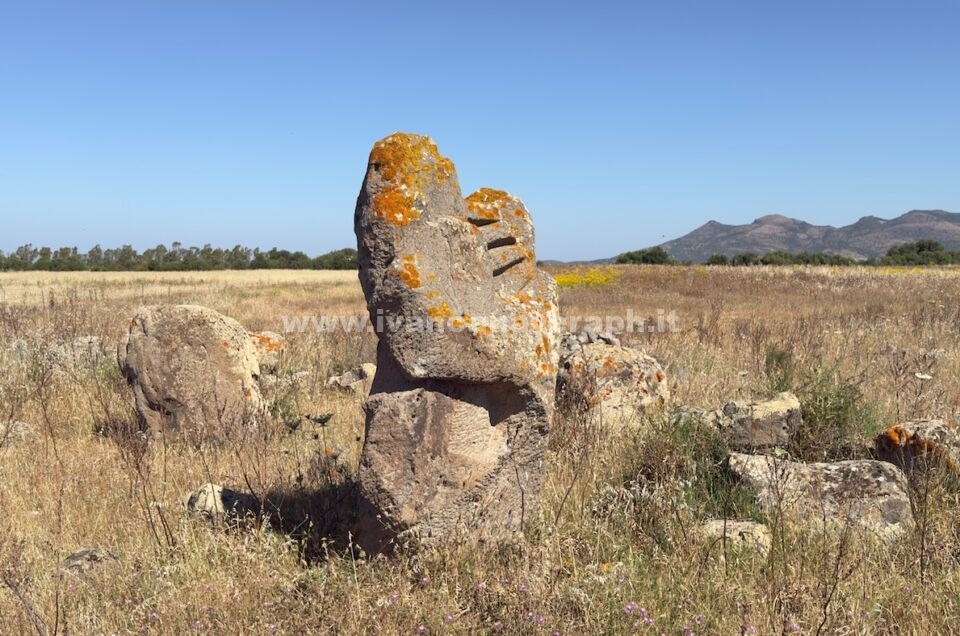
Menhirs can reach extraordinary heights, like the one in Villa Sant’Antonio that exceeds 5 meters, and present unique characteristics that distinguish them from European ones. Some are aniconic (without decorations), others present symbolic incisions, cup marks, or stylized anthropomorphic representations. Their function remains debated among archaeologists: they could have been territorial markers, solar or lunar cult elements, or funerary monuments linked to ancestor worship.
🌟 Distinctive Characteristics of Sardinian Menhirs
Sardinian menhirs are distinguished by the variety of materials used, mainly trachyte, granite, and basalt, often sourced locally. Their distribution across the territory is not random: many are oriented according to precise astronomical directions, suggesting profound knowledge of celestial cycles by Neolithic populations. Some sites present impressive alignments, like those at Pranu Mutteddu in Goni, where megaliths seem to form true stone “roads” that disappear toward the horizon.
🏛️ The Most Famous Menhirs of Sardinia
🔥 The Villaperuccio Menhir – Luxia Arrabiosa
In the territory of Villaperuccio, in the Terrazzu locality, stands the majestic Luxia Arrabiosa menhir, a volcanic stone monolith almost six meters high. This impressive megalith represents one of the most spectacular examples of Sardinian megalithism in Sulcis. The name “Luxia Arrabiosa” (Angry Lucia) derives from popular tradition that attributed magical and malevolent powers to the stone.
In the Villaperuccio area, numerous other menhirs are present: in Monte Narcao, Is Pedras Crocadas, Is Pireddas, Is Melonis, Bacc’e Fraus localities and between Is Faddas and Is Cotzas localities. These monuments are made mainly of trachyte and granite, materials that give them particular resistance to atmospheric agents. The concentration of menhirs in the area suggests that this territory was of particular sacred importance for the Neolithic populations of Sulcis.

⛰️ Monte d’Accoddi – The Temple with the Porto Torres Menhir
The Monte d’Accoddi complex, located in the Sassari territory toward Porto Torres, represents one of Sardinia’s most enigmatic archaeological sites. This complex is located in a portion of territory that registers an important presence of prehistoric monuments distant from each other by a few hundred meters. Within the sacred area is a menhir that was an integral part of the temple’s cult system.
The main structure of Monte d’Accoddi is unique in the western Mediterranean, reminiscent of Mesopotamian ziggurats. The menhir associated with the temple testifies to the complexity of Neolithic religious practices, where megaliths functioned as mediators between the earthly and celestial worlds. The site’s dating ranges from 3200 to 2800 BC, when the Ozieri culture flourished.

👉 Per i miei viaggi scelgo sempre DiscoverCars per il noleggio auto.
È affidabile, veloce e con ottime tariffe.
👉 I always choose DiscoverCars for my trips.
Reliable, fast and with excellent rates.


🏔️The Villa Sant’Antonio Giant – Monte Corru Tundu
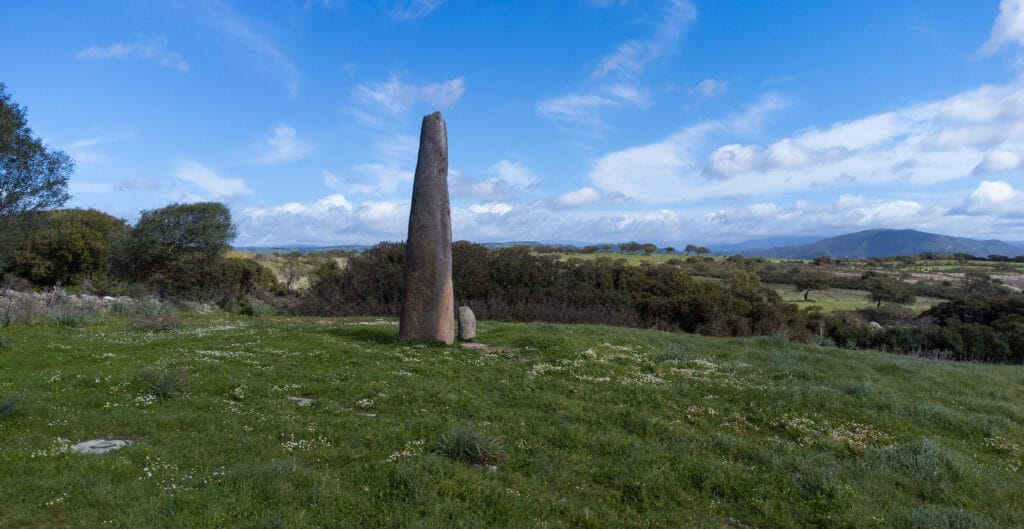
In Villa Sant’Antonio stands the Monte Corru Tundu menhir, one of Sardinia’s largest, 5 meters and 75 centimeters high. This stone colossus presents a tapered shape with one flattened face and one rounded, characteristics that make it unique in the Sardinian megalithic landscape. In Villa Sant’Antonio territory, the concentration of perdas fittas is extraordinary, megaliths created between 3300 and 2500 BC.
The Monte Corru Tundu menhir is not isolated: in its vicinity, near the Is Pardas necropolis, other megaliths are found that probably formed an integrated cult complex. The presence of domus de janas tombs in the immediate vicinity confirms the religious and funerary importance of the area during the final Neolithic. The stone used is a local pinkish granite that gives the monument a particularly suggestive appearance, especially at sunset.
🏛️ Su Para e Sa Mongia – The Sant’Antioco Menhirs
Sant’Antioco island preserves some of Sardinia’s oldest and best-preserved menhirs. “Su Para e Sa Mongia” (The Priest and the Nun) are two megaliths that popular tradition has anthropomorphized, attributing human features to them. These menhirs, made of local trachyte, date to the period between 3400 and 3000 BC and testify to the island’s importance already in Neolithic times.
The popular denomination reflects traditional Sardinian communities’ tendency to humanize these ancient monuments, creating legends and stories that have preserved their memory through millennia. The two menhirs are positioned to be visible from the sea, suggesting a possible landmark function for ancient navigation. Their conservation is exceptional, allowing appreciation of the technical mastery of ancient Neolithic stonemasons.

🏛️ Megalithic Complexes and Museums
🏛️ The Laconi Menhir Museum
The valley of menhirs, in Laconi territory, is a place to explore to know the works of ancient ancestors who lived in the Neolithic. The Laconi museum represents the main reference point for the study and conservation of Sardinian menhirs. At the Laconi museum, menhirs with different typologies can be admired, some of which present symbolic and anthropomorphic decorations.
The museum itinerary offers a complete overview of the Sardinian megalithic phenomenon, with virtual reconstructions that allow understanding of the original appearance of archaeological sites. The collection includes not only menhirs from Laconi territory but also specimens from other Sardinian areas, offering a unique comparative framework. Particular attention is dedicated to stone working techniques and tools used by ancient Neolithic craftsmen.
🌄 The Laconi Valley of Menhirs
The Laconi valley of menhirs constitutes one of Sardinia’s most suggestive archaeological landscapes. In this territory, characterized by gentle granitic hills, dozens of megaliths concentrate, creating a unique and mystical atmosphere. Menhirs are distributed along ancient communication routes, suggesting their function as territorial markers and reference points for Neolithic populations.
The valley’s visiting route allows appreciation of the typological variety of Laconi menhirs: from the simplest and aniconic ones to those decorated with solar, lunar, or anthropomorphic symbols. Some present incisions that could represent star maps or primitive astronomical calendars. The conservation of this megalithic landscape is exceptional and offers an immersive experience in the world of ancient Sardinian civilizations.
🌾 The Sorgono Menhirs – Biru ‘e Concas
In Sorgono is the Biru ‘e Concas complex, characterized by notable menhir alignments similar to those of Pranu Mutteddu in Goni. This site represents one of the most spectacular examples of megalithic architecture in central Sardinia. Menhirs are arranged in parallel rows extending for hundreds of meters, creating a scenographic effect of great impact.
The function of these alignments is still under study: they could represent astronomical calendars, petrified ritual processions, or large-scale territorial markers. The orientation of megaliths follows precise directions that coincide with cardinal points and significant astronomical phenomena like solstices and equinoxes. The Biru ‘e Concas site has been recently enhanced with visiting routes that allow appreciation of the megalithic complex’s grandeur.
🏔️ Pranu Mutteddu in Goni – The Cemetery of Giants
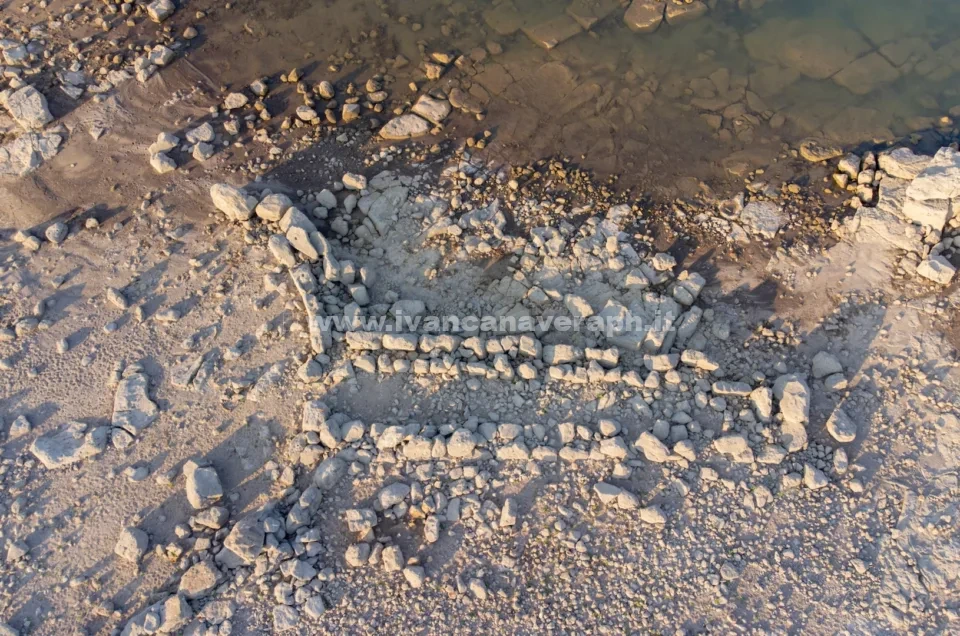
The Pranu Mutteddu archaeological complex in Goni presents menhirs aligned in long rows, in an area very rich in Neolithic megalithic monuments. This extraordinary archaeological site, located in South Sardinia, represents one of Europe’s most important megalithic necropolises. Menhirs are associated with circle tombs and dolmens, creating a funerary landscape of exceptional historical and artistic value.
Pranu Mutteddu menhirs are arranged in different formations, probably oriented according to certain astronomical phenomena. Archaeoastronomical research has confirmed that many megaliths are oriented toward sunrise and sunset points of the sun and moon on significant dates of the Neolithic calendar. The site is also characterized by the presence of petroglyphs, rock incisions representing solar symbols, spirals, and anthropomorphic figures.
🔍 Origins and History of Menhirs in Sardinia
🌅 The Neolithic and Ozieri Culture
Sardinian menhirs were created between 3500 and 2500 BC, during the epoch of Ozieri culture. This Neolithic civilization represents one of the most flourishing moments of Sardinian prehistory, characterized by a complex society that left exceptional testimonies throughout the island’s territory. Ozieri culture takes its name from the locality where the first finds were discovered, but its influences extended from the entire Sardinian territory to the islands of Corsica.
Menhir realization required evolved social organization, capable of coordinating the work of extraction, transport, and erection of monoliths weighing several tons. This implies the existence of stone-working specialists and religious or political leaders capable of mobilizing community resources for projects of such scope. The geographical distribution of menhirs suggests a territorially organized society, with power centers distributed in the main valleys and plains of the island.
🎨 Techniques and Symbolism
The creation of menhirs required sophisticated techniques for quarrying and stone working. Ancient Sardinian craftsmen used stone tools to detach blocks from quarries, often taking advantage of natural fractures in the rock. Once extracted, the monoliths were transported—sometimes over long distances—likely using levers, wooden rollers, and animal power.
Final shaping took place at the destination site, where the menhirs were carved into the desired form. Some show perfectly smoothed surfaces, achieved through patient abrasion using harder stones. Decorations, when present, were engraved with obsidian or flint tools. Common symbols include spirals, concentric circles, stylized anthropomorphic figures, and representations of weapons, all hinting at meanings linked to sun worship, fertility, and social power.
📍 Functions and Symbolic Meanings
The function of Sardinian menhirs is still debated among scholars, but archaeological evidence suggests multiple uses. Many megaliths are found near necropolises and may have served as commemorative markers, representing deified ancestors or family territory boundaries. Others appear aligned with specific astronomical phenomena, suggesting their use as megalithic calendars to guide agricultural and religious activities.
The spatial arrangement of menhirs is rarely random: they often form alignments that follow ancient paths or natural watersheds. This suggests a role as territorial markers, used to define borders between communities or to indicate sacred sites. Some isolated menhirs may have served as milestones along pilgrimage routes or trade paths. The presence of cup marks and symbolic engravings reinforces the sacred character of these monuments, which acted as a bridge between the earthly and the spiritual realms.
Le tombe dei giganti in Sardegna sono affascinanti testimonianze dell’età nuragica e rappresentano un capitolo importante della storia dell’isola. Ecco alcune delle più importanti:
- Li Lolghi: Arzachena, queste tombe sono caratterizzate da blocchi di pietra e forme rettangolari absidate.
- Coddu Veccia: La tomba dei giganti di Coddu Vecchiu è un importante sito archeologico nuragico situato nel territorio del comune di Arzachena
- Pascaredda: Trovata a Calangianus, questa tomba presenta una camera funeraria lunga e stretta.
- Sa Domu e S’orcu: La tomba di giganti di Sa Domu e S’orcu un monumento archeologico situato ad un’altezza di circa 260 metri nell’altopiano della giara di Siddi.
- Tamuli: Trovata a Macomer, questa tomba presenta una struttura simile a una nave capovolta.
- S’Ena e Thomes: è un sito archeologico di epoca nuragica situato nel comune di Dorgali
- Aiodda: Situata a Nurallao, questa tomba è un altro esempio di tombe dei giganti.
- San Cosimo: nel territorio di Gonnosfanadiga considerata la più estesa fra le Tombe dei Giganti conosciute
- Barrancu Mannu Santadi: La tomba di Barrancu Mannu, o di “Sa Tuerredda”, presenta il classico schema planimetrico delle tombe di giganti
- Su Niu de Su Crobu: La tomba dei giganti si trova a Sant’antioco vicino al complesso nuragico di Grutt’i Acqua
Se ti piacciono queste immagini puoi acquistarle “cliccando QUI” oppure “QUI”
👉 Per i miei viaggi mi affido sempre a Discoverycars per il noleggio auto. Se vuoi viaggiare senza pensieri, ti consiglio questa società: clicca sull’immagine e scopri di più!
👉 I always choose Discoverycars for my trips. If you want to travel safely and worry-free, I highly recommend them – just click the image to learn more!
👉 En mis viajes siempre confío en Discoverycars para alquilar el coche. Si quieres viajar con tranquilidad, te recomiendo esta compañía: haz clic en la imagen y descubre más.



You might also like